Kick up your Creativity with Color!

Kick up your Creativity with Color! Steps to Creativity for everyone
Want to be creative but don’t know how/where to start? If you haven’t already, click here and start with these 3 steps! If you have started with the beginning 3 steps, then you’ve accomplished a lot!

  • Your eyes are open to inspiration. You take photos and make lists of things to sketch.
  • You’ve been sketching regularly in pencil. Hopefully noticing the difference between the softer B and the harder H pencils. You have a regular creative practice!
  • You don’t just draw something once – you practice drawing it several times. Take a moment to look through your sketches and see overall how much you’ve progressed!

Well done. When you are ready, move on to these steps – that are all about Color!

1. Colored Pencil or Watercolor? – The next logical step may seem to be colored pencils, but if you are itching to paint, and want something more fluid, I recommend watercolor. Here is where YOU decide what path your creative journey takes. This is about finding what YOU like. If you need recommendations on either see below.

2. Start simply with your sketchbook. Continue with your creative habit of sketching regularly – but now use color! You can use regular pencil first and then add color – or start directly with color. I recommend working in your sketchbook because it’s a no pressure, play zone, where you can practice and learn. Note: if you decide to use watercolor – please look at my sketchbook recommendation below, so your pages don’t buckle.

3. Beyond the sketch. After practicing in your sketchbook, it’s time for a drawing or painting that you spend more time on. After all your loose, quick sketches, you are ready. It can be a page in your sketchbook, or perhaps use a nicer paper – see recommendations below based on your choice of medium. Before you start, plan it out. Pick a reference photo, study it, and lightly plan it out in pencil.

When you are working on a drawing or painting for a longer period of time, stepping away and coming back to it with fresh eyes, helps a lot. I sometimes work with my reference photo and paper upside down – to check that things look right. Don’t expect immediate results. Don’t give up because it isn’t looking like you envision. I used to be a “quitter,” but I learned that it takes time, and the results often surprise me if I stick with it, and work through “mistakes.” In the end, any “weak” areas – are just things to work on for the next time. It’s a learning process. Good Luck!

My recommendations:

Colored PencilsPrismacolor Colored Pencils
Strathmore Bristol Vellum Pad – Smooth thicker, bright white paper – great for a colored pencil project.

Watercolor Tube Sets – I love Windsor & Newton paints and started with their affordable Cotman “student grade”
Canson Multimedia Sketchbook – I love this versatile, bright white, thicker sketchbook paper
Fluid Watercolor Paper – great for a watercolor painting. Tape down the sides to a larger piece of cardboard with painter’s tape to prevent buckling!

Colored Pastels are another option. I never really got the hang of them, but my daughter loves them. She uses the Prismacolor sticks.

Want a dose of creative inspiration? Sign up for my newsletter “My Creative Collection” by clicking here. Learn more here.

Click here to view my collection of watercolor and acrylic seascapes.

This post contains affiliate links to products/brands I use and recommend. I earn a small commission whenever you buy using these links, at no additional cost to you. Thank you for supporting my blog!

Practice makes Progress

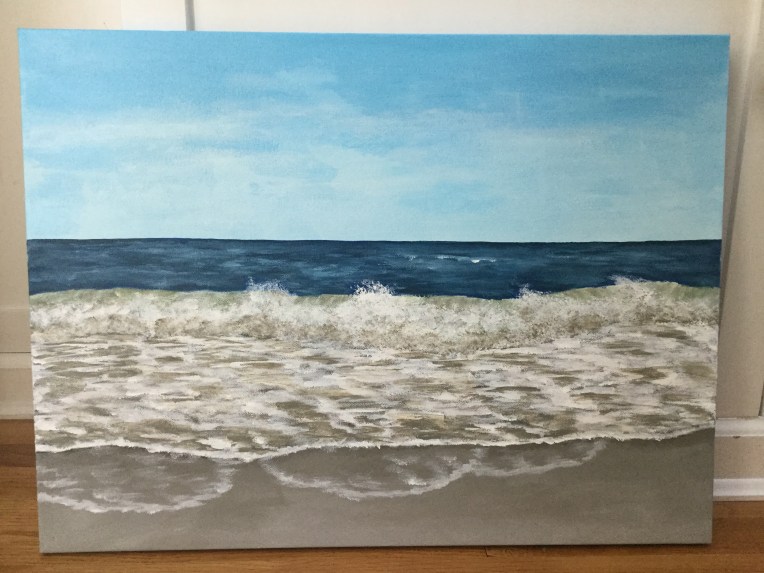
Acrylic seascape by Eileen McKenna | painting waves
Above my most recent acrylic seascape.

When I was younger and had less confidence in my artistic abilities I was hung up on talent. Nowadays I think of talent as just a starting point. It is almost irrelevant because if you work at drawing or painting, or whatever medium suits you, you will get better. I saw this in myself and in others (both online and in person). As I continue to paint my seascapes in acrylic paint (vs. my usual watercolor) I see how I have progressed. When I notice areas in a painting that need work, I try to improved them, or I think of ways to enhance these areas in the next painting. 

My first acrylic seascapes:
Transitioning from watercolor to acrylic
Click here to view my collection of watercolor and acrylic seascapes.

Want to be Creative? Start here.

Want to be creative? Start here! creative inspiration | how to be creative
Want to be creative but don’t know how/where to start? Try these 3 steps!

  1. Open your eyes to inspiration – “stop and smell the roses.” Take off your blinders and notice things – The flowers on your walk, the fruit in the fridge, everyday objects. Ever look at how interesting the shape of scissors is? Take photos. Make a list of things to sketch.
  2. Start simply with paper and pencil. Sketch the things that catch your eye. Sketch everyday or every other day, even if it is for just 5 minutes. Form a creative habit.
  3. Practice makes progress. Sketch your subject not once but several times, studying the object as you draw. With each sketch you’ll learn more, and notice more. And as your sketch gets better – you’ll be motivated to continue your new creative practice.

A piece of printer paper and a pencil will suffice, but if you want to invest in your creativity purchase a sketchbook, a set of pencils, and an eraser. See my recommendations below:

Sketchbooks – don’t buy anything that you’ll feel is too nice, too “precious” – that you’ll be worried about ruining. You should feel free to practice and play in your sketchbook. I started with a Strathmore Sketch Pad. If you like book form try this Strathmore in 9″ x 12″, or 5.5″ x 8.5″.

Pencils – drawing pencil sets come with B pencils and H pencils. B pencils are softer, H are harder. A 6B is softer than a 2B. H pencils are great for fine lines, while Bs are great for shading. I use Derwent pencils.

Eraserkneaded erasers are the best. They remove the pencil from the paper (without leaving a pink smudge). I use this eraser.

Spend time in this creative phase – weeks, months, it’s up to you. When you are ready to “kick” it up a notch read this.


Want a dose of creative inspiration? Sign up for my newsletter “My Creative Collection” by clicking here. Learn more here.

Click here to view my collection of watercolor and acrylic seascapes.

This post contains affiliate links to products/brands I use and recommend. I earn a small commission whenever you buy using these links, at no additional cost to you. Thank you for supporting my blog!

Creativity and Procrastination

Creativity and Procrastination
I’ve been frustrated this summer about not finishing my creative projects. I have a bunch of ideas I want to pursue but can’t seem to get anywhere. I knew that one problem was the fact that I had so many things that I was dabbling in. You can’t move very far forward if you keep changing paths. Also, I couldn’t blame time, I had the time, but I lacked the motivation to get to work.

On a recommendation, I downloaded the book “Eat That Frog!: 21 Great Ways to Stop Procrastinating and Get More Done in Less Time” and it immediately resonated with me.
Eat the frog - procrastination
Not only does the book address the things holding me back, but the author presents clear strategies to overcome this. Just reading a few pages motivated me!

Number one: I needed to define my primary goal, which is to continue revamping my online art shop. Once I identified this as the primary goal, and other projects as less important, I was motivated to attack the list of to do items (I already had). And once I accomplished one thing on the list, I was motivated to attack several other items – just as the quote above states.

Ironically this feeling, of being pulled in several directions and not finishing anything, isn’t new for me. In fact, when I started this blog (My Creative Resolution) it was my #1 problem. Having the blog, held me accountable – I felt I had to finish a project (or at least move forward) so I had something to post. And I was motivated to spend the first month or so pulling out old projects and finishing them. It was very cathartic, very satisfying, and very motivating.

I feel that way now, I’ve accomplished a lot with my online shop and am just waiting for new prints to come in. While I wait my mind is clearer to move onto the next priority – finishing my latest acrylic seascape painting. Prioritizing has helped me focus tremendously.

Click her for more info on “Eat that Frog!”

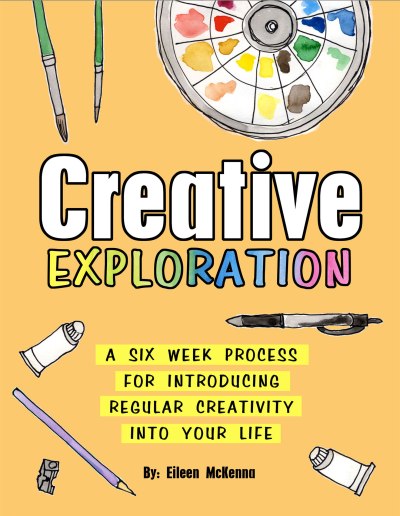
Learn about my new book Creative Exploration: A Six Week Process for Introducing Regular Creativity into your Life by clicking here.

Creative Exploration book -

This post contains affiliate links to products/brands I use and recommend. I earn a small commission whenever you buy using these links, at no additional cost to you. Thank you for supporting my blog!

Creative Ritual and “Resistance”

Creative Ritual and “Resistance”
I had some welcome free time this weekend and happily set up my acrylic paints outside. Now that I’m working with bigger canvases I know I need to set up my easel and get comfortable painting upright – but for now I’m still painting flat.

As I set up my supplies, I thought about how the ritual of setting up, gets you in the creative frame of mind. (I leave my watercolors permanently set up on our dining room table – so I often miss out on this.)

I don’t paint as often as I’d like to. It’s usually not for lack of time.  Sometimes, even though I want to, I can’t seem to motivate myself. I’ve heard this (problem) called “resistance” – by Author Steven Pressfield in The War of Art. When I can push through and create, I never regret it. Even if the results don’t wow me. Creating is such a relaxing feeling, such a release, that great results are just the icing on the cake.

Click here to view my collection of watercolor and acrylic seascapes.

Want a dose of creative inspiration? Sign up for my newsletter “My Creative Collection” by clicking here. Learn more here.

This post contains affiliate links to products/brands I use and recommend. I earn a small commission whenever you buy using these links, at no additional cost to you. Thank you for supporting my blog!

Acrylic Seascape Details

Acrylic seascape by Eileen McKenna

Painting Seascapes

Before beginning to work in acrylics, I practiced painting seascapes in watercolor. Although acrylics are different, I found practicing in watercolor to be very useful. I developed a process that, when I switched to acrylics, I could follow. And painting with watercolor on paper is less expensive than using up canvases.

Coastal inspired art | watercolor seascape by Eileen McKenna
Watercolor Seascape by Eileen McKenna

Process for Painting Seascapes

Here is a summary of my painting process. Keep reading for links to more in depth resources.

  1. Mix seascape colors  – I mix blues, greens, and browns from ultramarine blue, cadmium yellow, and cadmium red.
  2. Mark the horizon line. I use painter’s tape to achieve a straight horizon line.
  3. Paint the ocean water closest to the horizon darker and bluer.
  4. Paint the water in the cresting wave lighter and greener.
  5. Paint the shallow water near shore brown.
  6. Paint the sand. The sand is darkest closer to the ocean where it is wetter.
  7. Paint the crashing waves with white.
  8. Paint the foam with white and a flat brush. Horizontal lines help this area appear flat.
  9. Add shadows to the breaking wave.
  10. Paint the sky as a blue fade that is lighter closest to horizon.
Acrylic Seascape painting

Tips for Painting Acrylic Seascapes

  • Study a reference photo to identify the details that will make your seascape more realistic looking.
  • Clouds in the sky – I used an acrylic gel medium to thin out the paint and overlay colors for a more transparent look.
  • Paint lighter areas on the ocean for the sunlight
  • A dry brush can help create the spray off a crashing wave
  • Use an art sponge to make the shadows in the crashing wave look more natural.
  • Add a dark line beneath the edge of the foam to make the foam appear thicker.
Art sponge makes more natural looking shadows when painting waves

Practice painting seascapes in watercolor with these tutorials:

I share my step by step process for painting watercolor seascapes in the following tutorials. Choose the format that works best for you:

Easy Watercolor Seascape online video lesson for beginners
How to paint the ocean in watercolor and gouache | tutorial | step by step instructions | painting tips
Watercolor Seascape Painting Tutorial

For a weekly dose of creative inspiration ~ Sign up for my weekly newsletter here.

This post contains affiliate links to products/brands I use and recommend. I earn a small commission whenever you buy using these links, at no additional cost to you. Thank you for supporting my blog!

Learning Acrylics

Acrylic seascape by Eileen McKenna

In May I switched from painting in watercolor to painting acrylic seascapes. I painted ten 12” x 12” canvases – intent on getting comfortable with the different medium. It was so frustrating in the beginning, but with each painting I learned something. I’ve pulled out the acrylics again – this time with bigger canvases, and I’m reminded of what I learned so far.

What I’ve learned about acrylics:

  • A coat of gesso makes the paint go on easier
  • When your brush starts to split – you need more water
  • When your brush is drippy – that’s too much water
  • Blend the colors next to each other for a more natural look
  • Blending works best when both colors are wet
  • It is better to work when the paint on the canvas is wet and you have plenty of your colors mixed and ready
  • Add highlights by adding white paint (or lighter paint) to your brush and blending it with the wet paint on the canvas
  • To thin the paint and overlay colors use  acrylic gel medium.
  • Use little canvases (or a canvas pad) to test color mixes
  • Painting in acrylic involves more set up and prep than watercolor. And more clean up.
  • Using a sheet from a palette pad – taped to your palette – makes clean up easier!
  • It is not as easy with acrylics to make a quick fix or change
  • Using painter’s tape for a straight horizon line presents some challenges. The paint can accumulate at the tape creating an edge.

Click here to view my collection of watercolor and acrylic seascapes.

Want a dose of creative inspiration? Sign up for my newsletter “My Creative Collection” by clicking here. Learn more here.

This post contains affiliate links to products/brands I use and recommend. I earn a small commission whenever you buy using these links, at no additional cost to you. Thank you for supporting my blog!

Teaching kids to paint watercolor seascapes

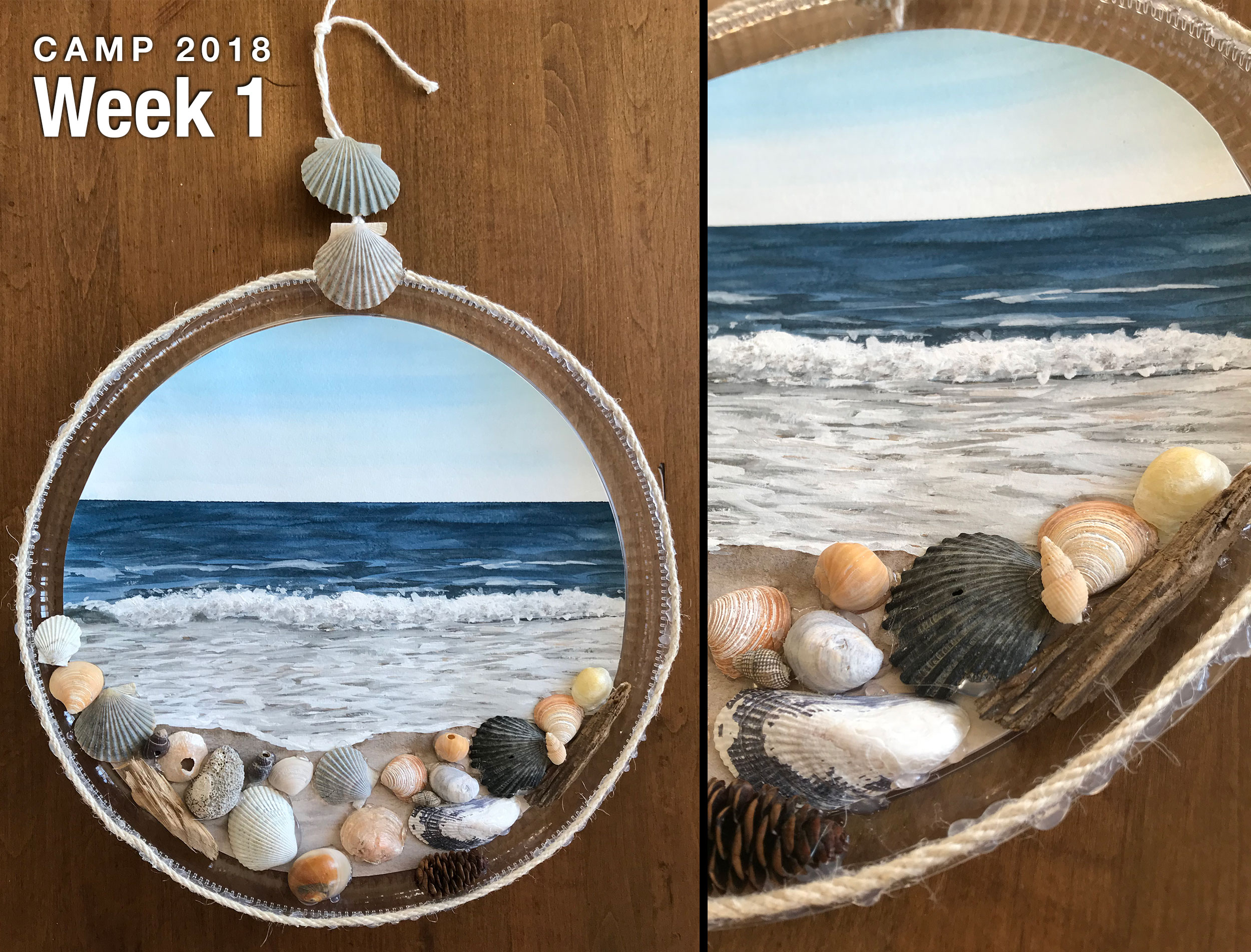
Watercolor seascape seashell wall hanging project

Last week I had the opportunity to teach kids ranging from 1st grade through high school how to paint the ocean with watercolor. The seascape painting was part of a 12” seashell wall hanging project to be completed over three days. I was excited but nervous.

Even though the kids were somewhat divided up by age – the age range was the biggest challenge. The kids were so sweet and I really enjoyed getting to know them over the course of 3 days. And their paintings (and projects) turned out amazing.

I had the whole project mapped out, which was helpful. Finishing early worked out fine, because I used the extra time to allow them to play and experiment with watercolor. Finding a few fun projects on Pinterest helped. What I would improve on next time would be setting up the project to allow them to work more independently – if possible.

I hope the kids had fun and have a new appreciation for watercolor.