Watercolor Basics ~ Paint – What type of paint should you use?

There are several types of watercolor color paint including – pans (or cakes), tubes, and liquid. Many paints are available in student and artists grades. Student grades are a more affordable option, but usually have less pigment.

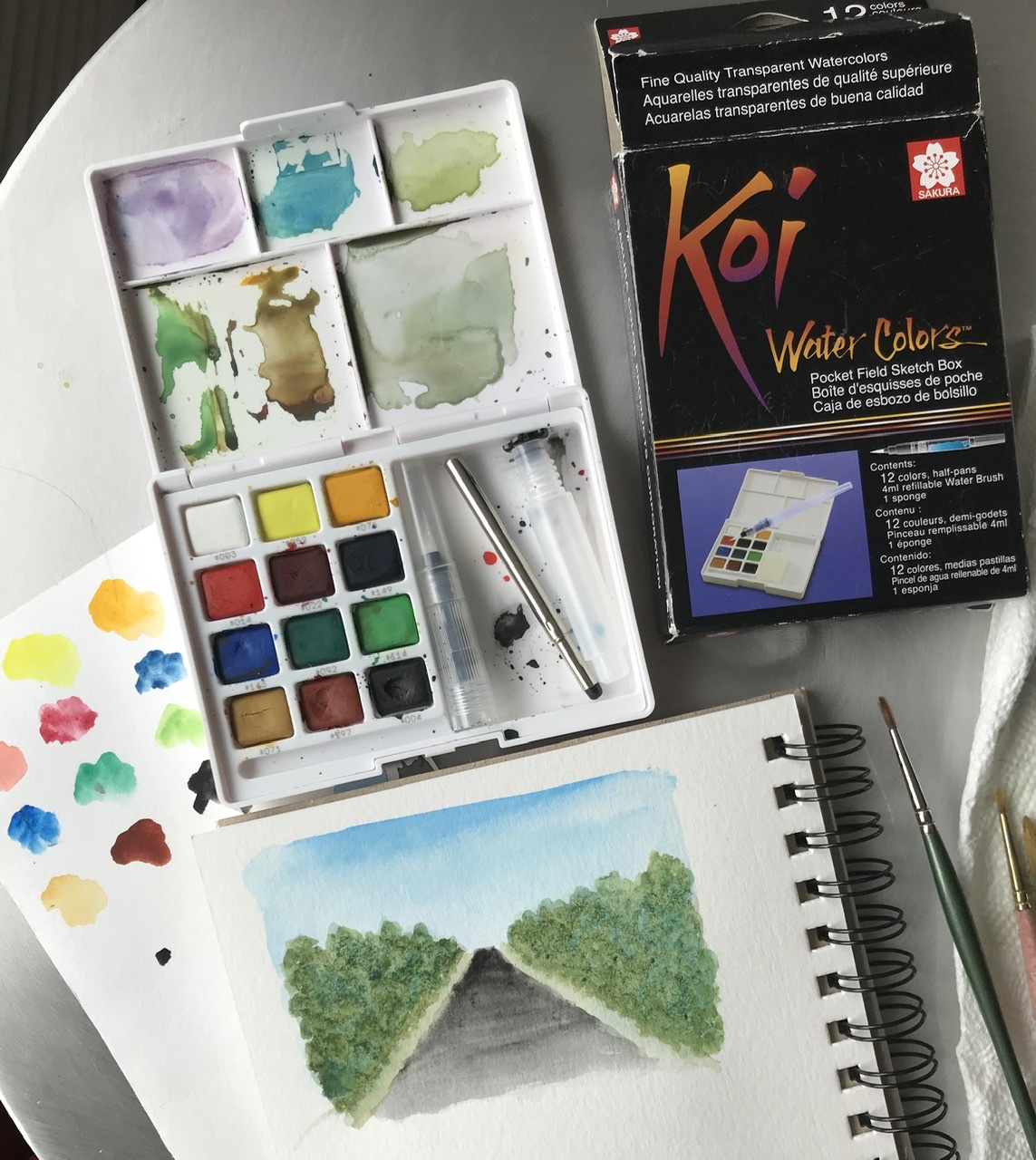
Pans (or cakes) – When I was starting out I associated watercolor pan sets with the paints I used as a child. I have since learned that the pans available today contain rich, saturated colors and are widely used by many watercolor artists. Just like my Sakura Koi travel palette!

Tubes – I started with tubes and have stuck with them. I was originally gifted a set of Van Gogh tubes. The set includes a variety of colors. It’s a great set to start out with. As I used up my Van Gogh tubes, I began replacing them with Winsor & Newton tubes. I also began adding other colors (like pink and purple) with Winsor & Newton tubes, sometimes with their student grade brand Cotman.

My Palette – I squeezed small amounts of most of my colors into my palette. I reactivate dried paint by mixing it with water. Sometimes I work directly from the tube and use a mixing tray or the top of a plastic egg carton to add water or mix colors. You don’t actually need tons of colors – I often create paintings from primarily just three colors – Ultramarine, Cadmium Red and Cadmium Yellow.

Liquid – Watercolor paint also comes in liquid form. Some liquid watercolors – like the ones below – have an eye dropper top. This seems like a great way to guarantee that you mix the same colors every time – just keep track of how many drops you use. My friend uses liquid watercolors and her colors are rich and vibrant.

Which type of paint you use is a personal preference. I don’t think there is a wrong answer. Pick one to try and see how you like it!

Tip – always keep a scrap piece of paper nearby to test the saturation of a color and/or your color mix before touching your painting!

Did you read these Watercolor Basic posts?
Watercolor Basics – Brushes
Watercolor Basics – Paper 5 Tips.

Ready to get started in watercolor? Check out “Beginner Watercolor Exploration.”

  • Learn the fundamentals.
  • Practice with exercises and projects.
  • Discover a love of watercolor!

Start your watercolor journey today! Learn more here.
Beginner Watercolor Exploration Guide pdf download | how to guide beginner watercolor

This post contains affiliate links to products/brands I use and recommend. I earn a small commission whenever you buy using these links, at no additional cost to you. Thank you for supporting my blog!
Watercolor Basics ~ Paint - What type of paint should you use?


Watercolor Basics ~ Brushes: What types of brushes should you use

If you have ever stood in an art store paintbrush aisle, you know how overwhelming selecting brushes can be. There are brushes for every medium, synthetic and natural brushes, and brushes in a variety of shapes and sizes. I have a variety of brushes but in truth I only use a few.

Here are some tips for selecting brushes:

  • Round brushes are the most commonly used brushes for painting in watercolor
  • Thick and thin. If you could only buy two brushes I would recommend a medium sized round brush for larger areas (like a 6 or an 8) and a thinner round brush (like a 1 or 2)
  • Natural vs. synthetic. Synthetic brushes tend to be more affordable and are a good option (especially when you are just starting out.)

Over time I’ve learned:

  • Flat brushes are great for horizontal lines. I use flat brushes for certain details when painting seascapes.
  • Very thin brushes (less than 1s) are great for fine lines and detail.

I rarely use bigger brushes (10+). I may use them to wet a background or to paint a gradient in the sky but I primarily use size 8 and smaller. It’s a personal preference that may have to do with the size of the paintings I most commonly create (8”x10”). My choices may also have to do with style I paint in. Some artists paint in a looser style perhaps using larger brushes, and some in a much tighter more realistic style, perhaps using thinner brushes.

There are also specialty brushes for creating certain types of lines like a fan brush. More often than not, I stick with the brush in my hand instead of switching brushes.

Caring for your brushes:

  • Wash your brushes and lay them flat to dry on a paper towel.
  • Don’t leave your brushes sitting in water. It will cause the paint on the brush to chip off.
  • Use an old brush to reactivate dried out paint. I’ve squeezed my paint into a palette. When I want to use a color, I mix it with water. To protect my newer brushes I use an old brush to stir the water into the dried out paint.

The more you paint, the more your own personal preferences and brush needs will emerge. Start with a few round brushes and add from there.

If you missed the last Watercolor Basics post you can read it here –> Watercolor Basics – Paper 5 Tips.

Ready to get started in watercolor? Check out “Beginner Watercolor Exploration.”

  • Learn the fundamentals.
  • Practice with exercises and projects.
  • Discover a love of watercolor!

Start your watercolor journey today! Learn more here.

Beginner Watercolor Exploration Guide pdf download | how to guide beginner watercolor

This post contains affiliate links to products/brands I use and recommend. I earn a small commission whenever you buy using these links, at no additional cost to you. Thank you for supporting my blog!
Watercolor Basics - What types of brushes to use


Painting on the road – travel watercolor set

Painting on the road - travel watercolor set
Whenever I travel I bring my watercolors with me. I have a compact travel set that is the perfect amount of colors. Painting while on vacation is a great way to experience a place. I take photos while I’m out with my family and paint during downtime at the hotel. You notice so much more when you are painting something. I’ve painted in NY, South Carolina, Tennessee, Georgia, and even France.

I work in a small Canson sketchbook with nice thick watercolor paper and paint small scenes and illustrations. This time I brought a few brushes – older ones because sometimes they get bent in my bag. I’d like to get a brush holder like this one.

Another fun thing to do is visit the local art store. I’m eyeing one up around the corner from where we are staying.

Painting during vacation reaffirms my regular creative practice. It’s common before vacation to be busy and not have time. Painting during a trip gets me back in the groove.

Ready to get started in watercolor? Check out “Beginner Watercolor Exploration.” 

  • Learn the fundamentals.
  • Practice with exercises and projects.
  • Discover a love of watercolor!

This post contains affiliate links to products/brands I use and recommend. I earn a small commission whenever you buy using these links, at no additional cost to you. Thank you for supporting my blog!



Watercolor Basics ~ Paper (5 Tips)

It’s Back to School time, so I thought it would be a great time to go back to basics, Watercolor Basics. Let’s talk about paper. When I first started out in watercolor I was using the wrong paper. Watercolor paper is specially designed for watercolor paint – it has texture, absorbs the paint, and can withstand a good amount of “working” at your painting before the paper starts to break down.

I resisted at first because I wanted a very white paper. I was using a paper that had a coating on it and the coating was preventing the paper from absorbing the paint. Eventually I found watercolor papers that were the cool white I wanted. Once I made the switch I realized what a difference the paper actually makes. 

I now use cold pressed paper. What does that mean? According to watercoloraffair.com,

“In a nutshell, the terms “hot press” and “cold press” refer to the paper’s surface finish or texture. Cold pressed paper has a slightly bumpy, textured surface. But hot pressed paper has a smooth surface finish. You will also hear artists talking about the tooth of the paper.”

The paper I use most often is Fluid Easy Block Fluid Watercolor Blocks, most often the 9″ x 12″ size.

Watercolor Paper Tips:

  • Always use watercolor paper or a multimedia paper – this is the multimedia sketchbook I use.
  • Before I paint, I trim my paper to 9″ x 11″. This creates a painting that fits nicely in mats and frames for 8″ x 10″ artwork. Before I started trimming the paper my paintings were too long for the mats and too much wasn’t visible in a standard mat. I use this mat set for 8″ x 10″ artwork. It includes the mat, backing board, and a clear bag to protect your matted artwork.
  • Always tape down your paper to a board using painter’s tape. I use the cardboard back of old art pads. The cardboard needs to be larger than your paper.I use a painter’s tape like this one. I prefer tape that is less than an inch wide. The reason for taping down your paper is that water and paint causes paper to buckle. Taping your paper to a board helps keep the paper flat.

  • It is important to use the correct side of the paper. The side facing up when you take a sheet off the pad. If you have trouble keeping track – make a small pencil x mark on the back side of the paper.
  • Even though the paper is made for watercolor — Don’t rub your brush too hard or the paper will start to come apart. This can also happen when you overwork a section of your painting.

Other Watercolor Basics posts: 
Brushes: What types of brushes should you use?
Paint: What type of paint should you use?

Ready to get started in watercolor? Check out “Beginner Watercolor Exploration.”

  • Learn the fundamentals.
  • Practice with exercises and projects.
  • Discover a love of watercolor!

Start your watercolor journey today! Learn more here.

Beginner Watercolor Exploration Guide pdf download | how to guide beginner watercolor

This post contains affiliate links to products/brands I use and recommend. I earn a small commission whenever you buy using these links, at no additional cost to you. Thank you for supporting my blog!
Watercolor Basics ~ Paper | What type of paper should you use and other tips for painting with watercolor

Just 10 Minutes

Back to painting in watercolor

Sometimes life gets in the way of creativity and we are running around doing other things. Between teaching art and finalizing my new Beginner Watercolor Exploration Guide, I haven’t had time to paint. Well maybe I’ve had time, but not the motivation. Every time I walk past my paints – set up at the family room table – and see the blank sketchbook page I think, “I have to paint today,” and then I keep walking.

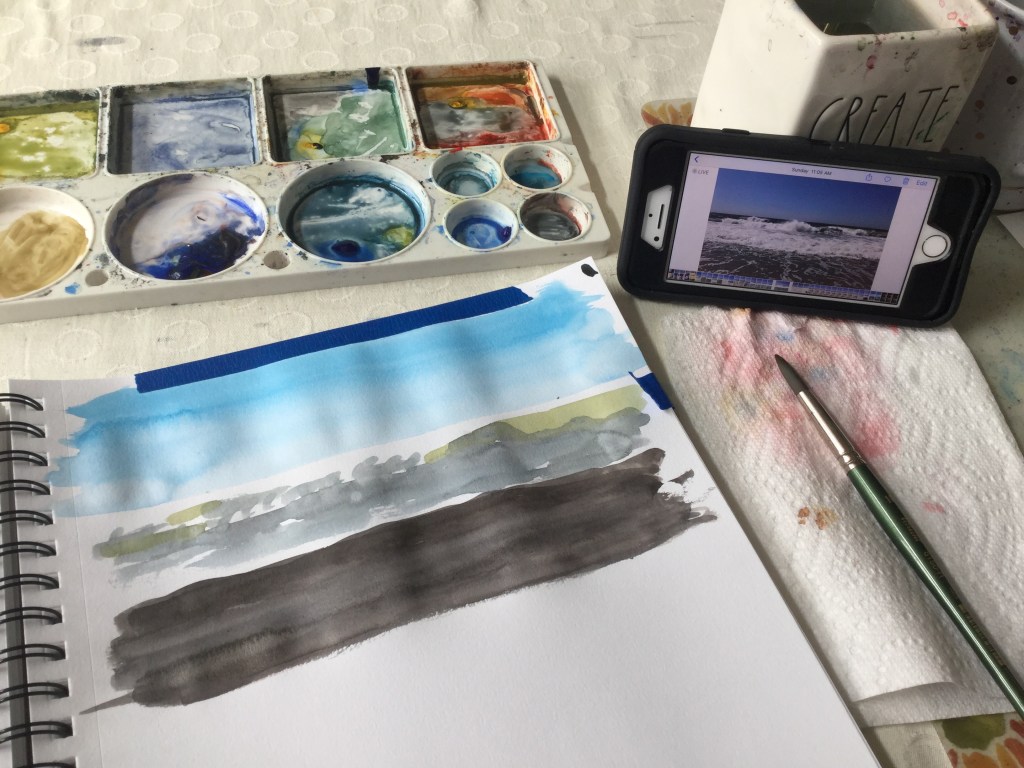
Today is the day. Just 10 minutes is enough to get me back into painting. Now I’m excited. I have plenty of reference photos on my phone – things that have been inspiring me, including surf from the recent tropical storm. I’m halfway to my paints already.

Ready to get started in watercolor? Check out “Beginner Watercolor Exploration.”

  • Learn the fundamentals.
  • Practice with exercises and projects.
  • Discover a love of watercolor!

Start your watercolor journey today! Learn more here.

Beginner Watercolor Exploration Guide pdf download | how to guide beginner watercolor

For the Love of Watercolor

For the love of watercolor   | watercolor for beginners how to guide

Over a decade ago as a young mom, I took a drawing class followed by a watercolor class. A few years later, I got serious about creating everyday and started my blog. I set out to explore every medium in search of my thing. The early days of my blog involved pencil sketches and working with acrylics. Then one day I decided to add color to my sketchbook and pulled out my watercolors. BAM! It hit me – I loved watercolor! I never put them away again.

Over the last few years I have developed watercolor painting projects and other learning resources in PDF and video form. Today I’m super excited to announce my new guide called “Beginner Watercolor Exploration.”

Ready to get started in watercolor? Check out “Beginner Watercolor Exploration.”

  • Learn the fundamentals.
  • Practice with exercises and projects.
  • Discover a love of watercolor!

Start your watercolor journey today! Learn more here.

Beginner Watercolor Exploration Guide pdf download | how to guide beginner watercolor

What’s in the downloadable pdf guide: 5 chapters, 5 painting projects, 50 pages.

The exercises and painting projects walk you through and build upon the fundamentals of watercolor. 

The 5 painting projects include:

  1. Starfish Painting
  2. Birch Tree Forest Painting
  3. Ice Cream Cones Painting
  4. Strawberry Shortcake Cupcake Illustration
  5. Seascape Painting

Start your watercolor journey today! Learn more here.

Monet inspired watercolors

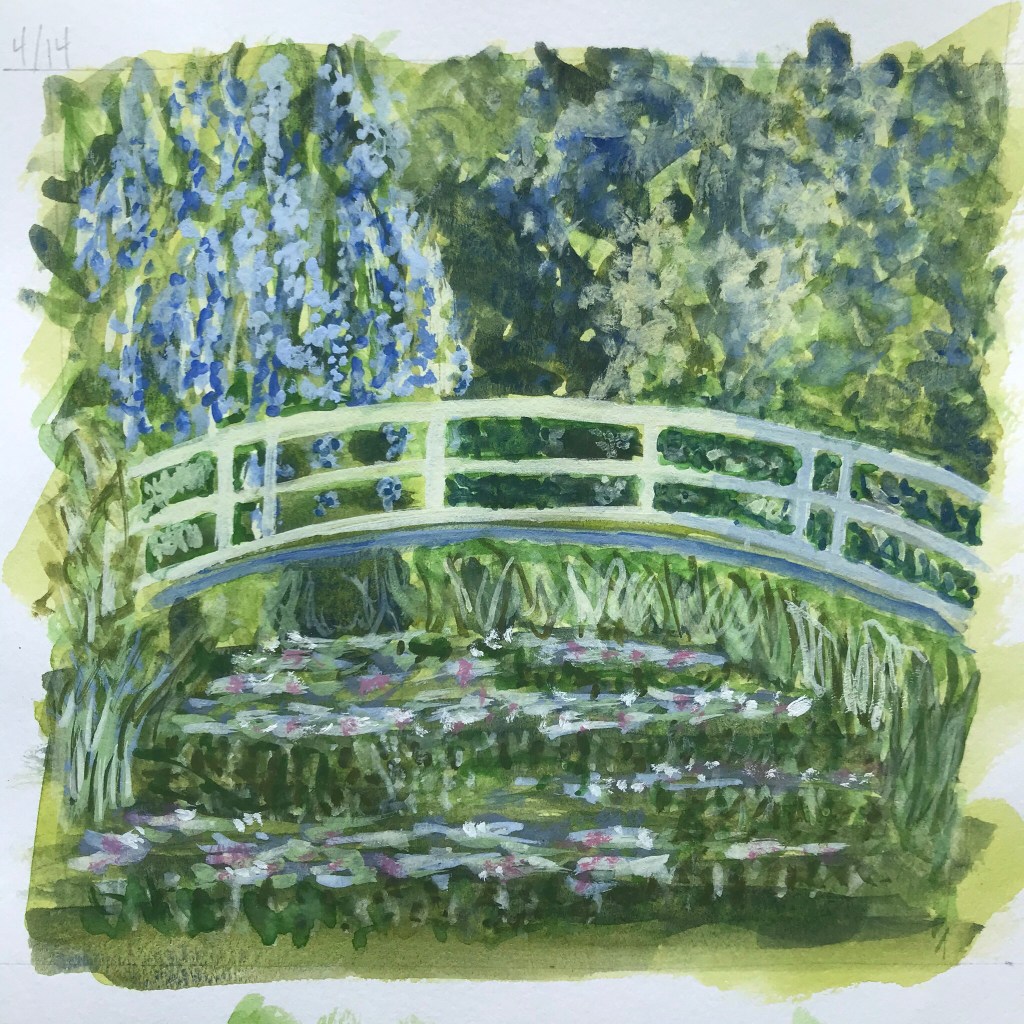
Monet inspired watercolor by Eileen McKenna

Last week I wrote about how I needed a “project” to inspire and motivate me. I was sitting down to paint less and less. I thought a two week project would be good – not too long, but long enough that there might be some progress in this pandemic situation. Last week’s post includes the steps to pick a project – read it here.

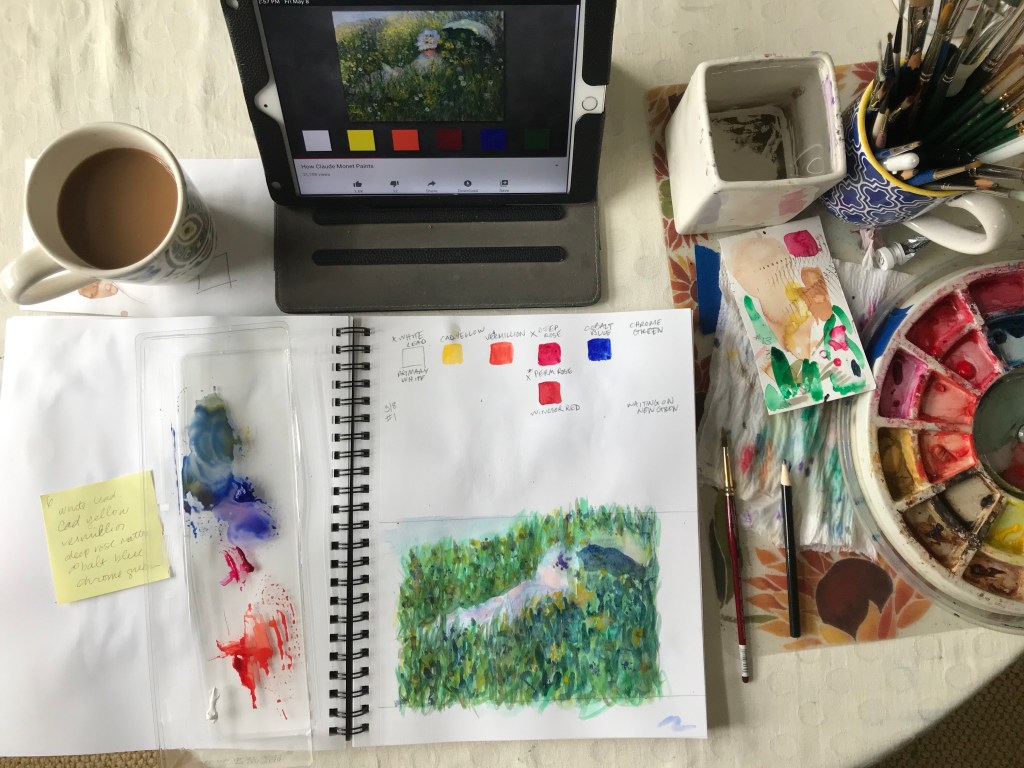
When I developed my 4 week “Let’s Paint Paris in Watercolor” program I dedicated one week to painting like the masters. Each week of the program is a different theme – Parisian Food, the Architecture, the Masters, the Palace of Versailles. During the masters week, we paint like Monet. I loved this project! I found painting with Monet’s color palette to be so interesting. And so when I picked my new project, I chose to paint like Monet.

Originally my plan was to paint anything, and work in Monet’s palette. That has morphed into painting his paintings. Today I painted the Waterlilies and the Japanese Bridge. It was so fun!

This kind of project makes me feel like I’m working on a school project – researching, learning. I love that my work over the next 2 weeks won’t be random, but will have a theme to tie it together.

If you are looking for a project, the “Let’s Paint Paris in Watercolor” program is a great deep dive into Paris. I learned so much about Paris and I share it all. I grew so much as an artist during the program! Real growth happens when we push ourselves outside of our comfort zone. Learn more here.

How to Pick a Creative Project

I’ve been thinking I need a creative project to help motivate me during self quarantine, especially since things don’t seem to be opening up any time soon. If this is going to continue – for 2 weeks, a month, more? – it would be nice to have something to do, practice a skill, and work towards a goal or final product.

How to Pick a Creative Project

It’s a challenge to pick a project. I definitely have ideas, but it’s like standing at a fork in the road and not knowing which direction to take. Here’s how to pick a creative project:

Step 1. Write down all the ideas that have been floating around your head.

Step 2. Evaluate the ideas. Which items are things you really want to work on? Which project would yield results you’d be especially excited about? Which project could you see yourself being excited about every day?

Here’s my list so far:

  • Drawing Lesson – Continue developing my online drawing lesson.
  • iPad drawing – practice
  • Color Wheel Book – Continue working on – illustrate
  • Clay – Learn polymer clay and create sea creatures (as an example for in person art camp project).
  • Watercolor – work on a specific subject or in specific colors
  • Video – Create another video promo.
  • Sew masks
  • Other idea

My list is often filled with things I think I should do or would like the final results of, but not things I feel like working on EVERY DAY.

Having trouble picking one idea? Sometimes we don’t know until we try. Spend a day sampling the project ideas you are most interested in. Spend 15-20 minutes on each project. Which one sparks the most interest and excitement?

Step 3. Pick a project. Make a decision and stick with it.

Step 4. Plan your creative time. Pick the time (and place) that you will work on this project. It’s easier to remember and make it happen if it’s every day at the same time. Things don’t happen if you don’t plan for them to happen.

Step 5. Follow through! Every project has peaks and valleys. Push through the hard days, do the work and the results will follow. Even 15 minutes a day adds up and is progress!

Want to be creative but don’t know where to start? Start your creative journey with my book Creative Exploration: A Six Week Process for Introducing Regular Creativity into your Life.

Learn more by clicking here.

Creative Exploration | How to be creative How to start an art practice
Start your creative journey today!


Plan your creative time  | regular creative practice | how to be creative | creative exploration
Plan your Creative Time | Creative Exploration – How to be creative | How to start an art practice

Watercolor Basics for Beginners

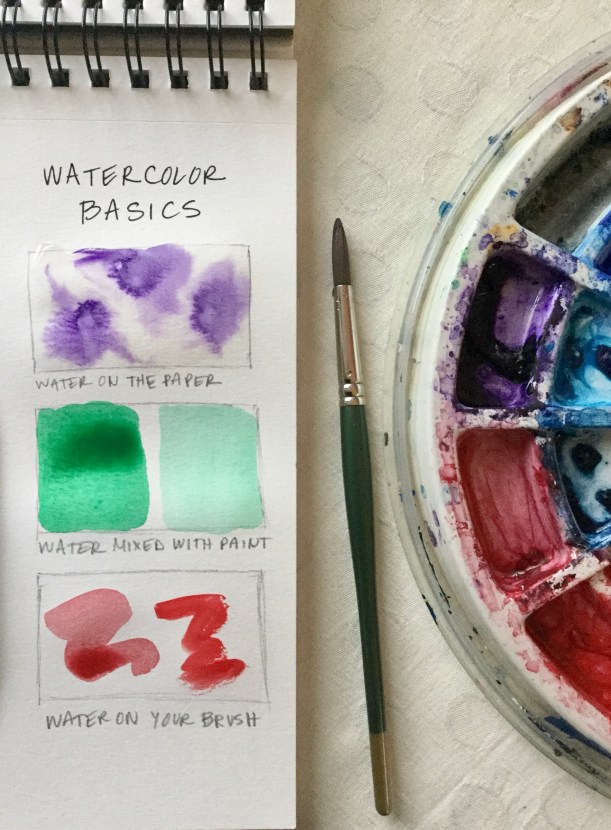
If you are new to watercolor – welcome! Watercolor is one of the most fun mediums. When painting with watercolor, aside from paint, water is the key ingredient. Water on the paper, how much water is mixed with the paint, and how much water is on your brush.

Water on the paper. If your paper is wet, the paint you add will spread quickly and even bleed into areas you didn’t touch with your brush.

Tip: Wetting your paper before adding paint, is a fun technique which leads to interesting backgrounds with colors blending into one another. Avoid too much water that leads to puddles on your paper. When puddles occur soak up the excess water and paint with a dry brush or paper towel.

Water mixed with paint. The more water you mix with your paint, the less saturated the color will be and the more transparent it will be on the paper.

Tip: Always test your brush on scrap paper before touching your painting so you aren’t surprised by the results.

Water on your brush. A brush dripping with water and paint will spread easily even on dry paper. A dry brush will not spread smoothly, but will go on more irregularly – missing some areas of paper.

Tip: To dry your brush blot it on a paper towel and soak up the extra water.

Experiment! Try out the different ways water changes how paint interacts with paper. You may feel you have no control with watercolor, but the more you know and can anticipate how the paint will react to situations, the more control you have.

Looking for resources for beginners? Check out my Etsy shop here.

Beginner Watercolor Painting Instructional PDF "What you need to know to get started with Watercolor" Beginner Printable Introduction
Watercolor Basics for beginners