

When I say that some paintings are easy, I don’t mean that there aren’t layers and layers to add, and details to fill in. They just feel easy. Each layer and detail added makes the painting better and better. And you know it, as you’re working.
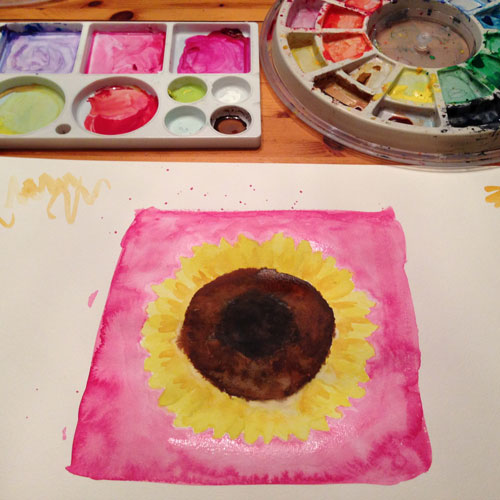
But this sunflower felt like childbirth – ha ha. It was the petals! I needed to add something. I wanted the petals to pop – and I didn’t want to add ink details this time. I tried a few grey brushstrokes on each petal, but that didn’t do it. I took a huge risk and added a blue outline to the edges of the petals, all the while thinking, “I’m probably ruining it!”

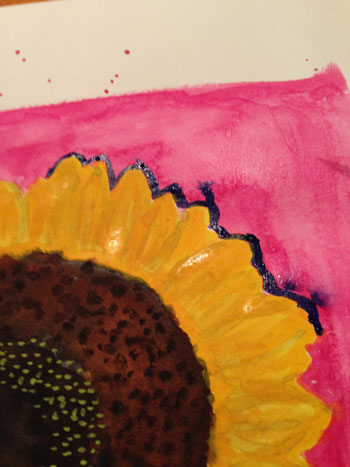

I wouldn’t say the blue outline ruined it, but the petals still needed something! I added more yellow. I added more white. In the end I added ink lines to the petals. Oh well! 🙂
Art

A morning dedicated to painting outside :)

It’s officially Summer and the kids are home, which totally throws off my routine. As I struggle to get a new schedule together, a priority is having time to paint and draw. The other morning I dedicated to painting, and because it was so nice out, I set up on my back patio.
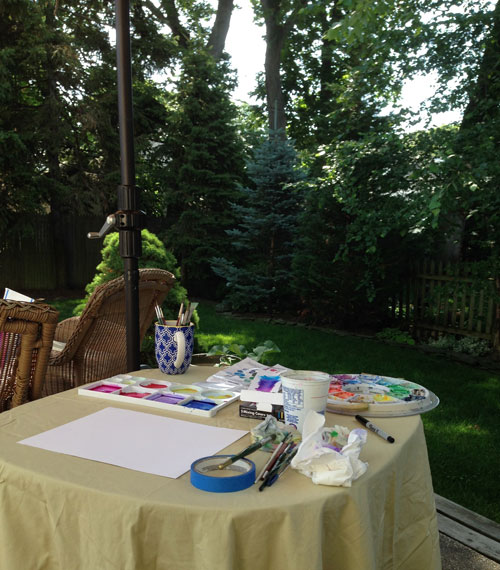
It felt great! Everyone was still asleep and the weather was beautiful. I had tons of inspiration photos from days prior – a trip to the beach, a stop at a little lake, and an amazing sunset. When I looked down at the blank piece of paper I felt totally at peace. There was no stress about what I would do, I would just let it happen. And I quickly got into a groove. I even turned a test scrap into a feather! (See first pic in the post.)
Sometimes we can be so productive, if we just give ourselves the opportunity to do so.
I’m hoping to have more mornings like this one! 🙂
Share this:

A Sunset and Gouache Paints

I’ve wanted to try gouache paints for a long time. Since reading about Illustrators who used them, and having no idea what they were. [Gouache paints are opaque watercolors.*] Two months ago I bought a little box of paints to try, but still hadn’t opened them! The other day on a whim, I decided to give them a try.

I’d heard gouache were like watercolor, but thicker, and can create more saturated colors. I was inspired by the sunset after a storm recently (see the photo below), so it seemed the perfect time to try them out.
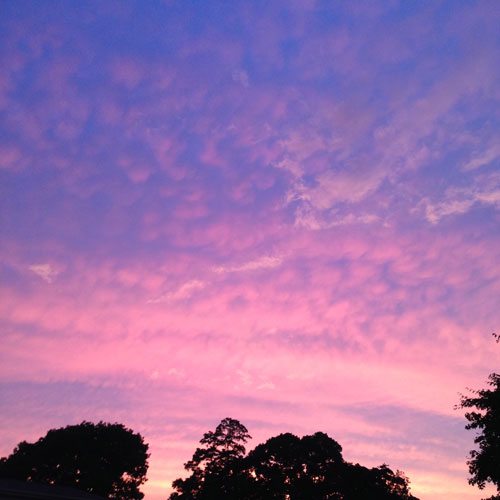
I’m not sure I needed to, but I used “India Ink” for the trees. I wanted as dark a black as I could get. In retrospect, I should have at least tested the gouache black to see if it could achieve this. I love the richness of the colors the gouache paints gave me!
Gouache description, courtesy of Blick:
Gouache is an opaque watercolor paint. Whereas transparent watercolors allow you to see the “white” of the paper below the paint, gouache can be applied in solid colors. This allows an artist to paint in layers from dark to light.
Gouache dries to a matte finish, which makes it easy to scan or reproduce electronically, since there is no glossy shine. Designer’s Gouache traditionally offers colors blended from a number of pigments, but some lines of Artist’s Gouache offer single-pigment colors. Student Gouache will have working characteristics similar to Designer’s Gouache, but with lower pigment concentration, less expensive formulas, and a smaller range of colors.
Share this:

Happy Father’s Day!

Today, I unexpectedly had some quiet time to paint. It’s been a busy couple of days, so it felt good to pull the paints out. The Shasta Daisies blooming out front are were my inspiration.
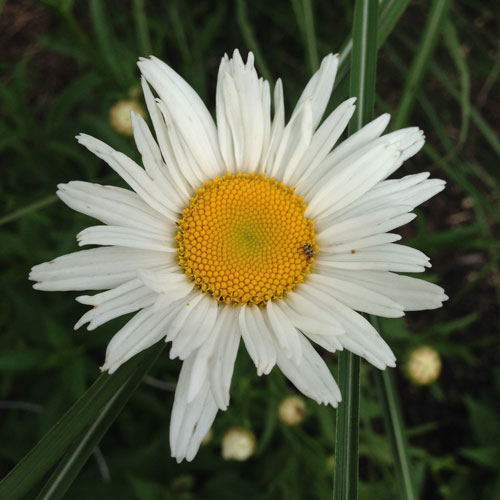
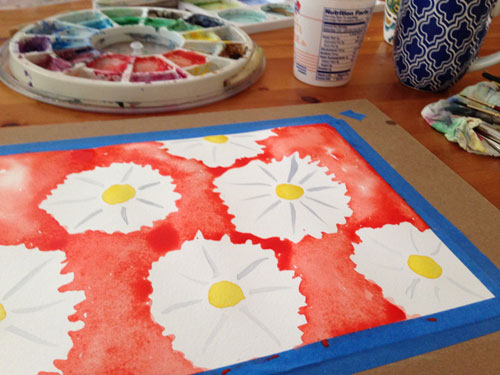
I hope everyone had a great Father’s Day with family! 🙂
Share this:

The town pool opens today!
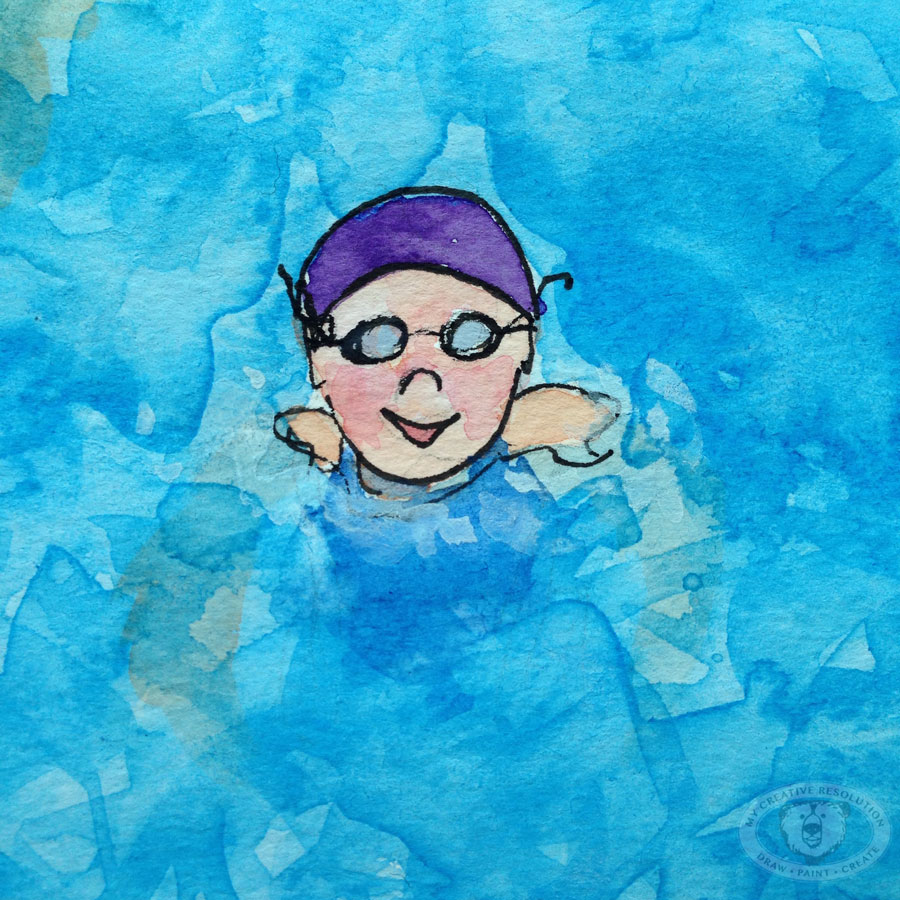
I’m looking forward to our local pool opening and swim team practice starting. Practice is early morning before the pool is open to the public. It’s pretty quiet while the kids are practicing. I usually sit and read. I’m a little shy about painting in front of others, but it would be the perfect time to sit and paint, with inspiration all around! So, you may be seeing less flowers and more blue in the coming weeks!
Share this:

Goodbye Spring!
This Spring I’ve been inspired by so many beautiful flowers! Here are 15 of the flower paintings I’ve created:
Share this:

Paint what’s in the fridge!
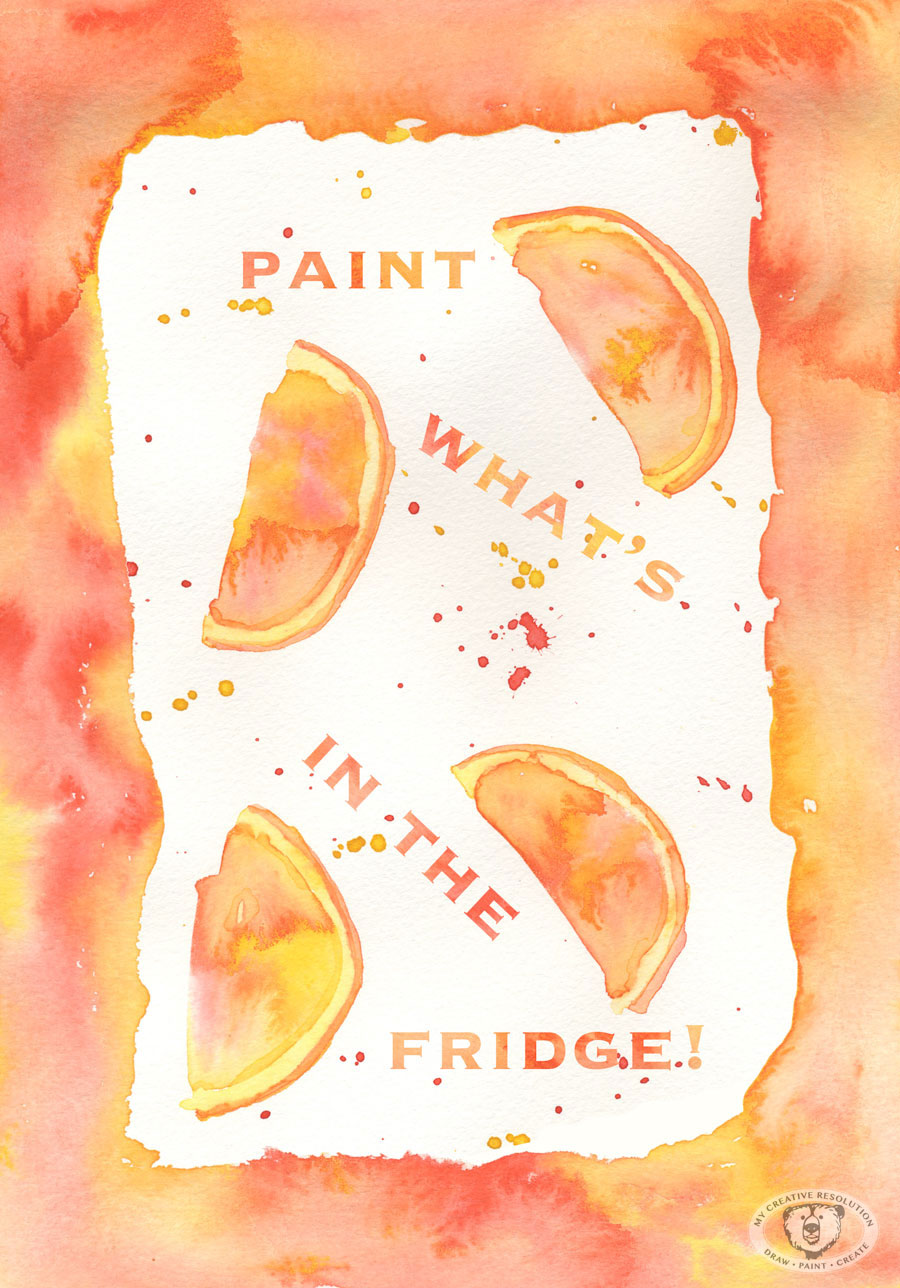
Even with all the flowers in bloom – I’m pulling things out of the refrigerator to paint!


This is something I’ve been doing for a while. Great color and textures to be found in the fridge. 🙂
See past food paintings:
Share this:

Learning with each painting

This Hydrangea was definitely a challenge. But whatever the outcome of a piece there’s still a takeaway – I learn something. When I multiply the number of sketches and paintings I’ve done since committing to my creative resolution (prob. between 315-400) and think of all I’ve learned (big and little things) – I am amazed.
While working on this piece, with all the little details of the flower, I thought, “This is hard.” But, it’s good to try hard things, it makes us better. And sometimes a piece isn’t about the final product, but about the process and the takeaway.
Here are my steps:
Wash, Ink, More Watercolor, More Ink


I worry that I overworked the final – too much ink. What is my takeaway from this piece? Hmmm. As I struggled to capture the dome of the hydrangea, I studied the photo, again and again. Should I have planned the piece out more from the beginning? Studied the photo before starting? I’m the girl who doesn’t read the instructions. Who dives right in and then tries to figure things out.
From the start I was fixated on the details of the flower petals – the shapes. In addition to this “detailed” thinking, I should have pulled back and thought about other “overall” elements before starting.
Share this:

Poppies & Practice

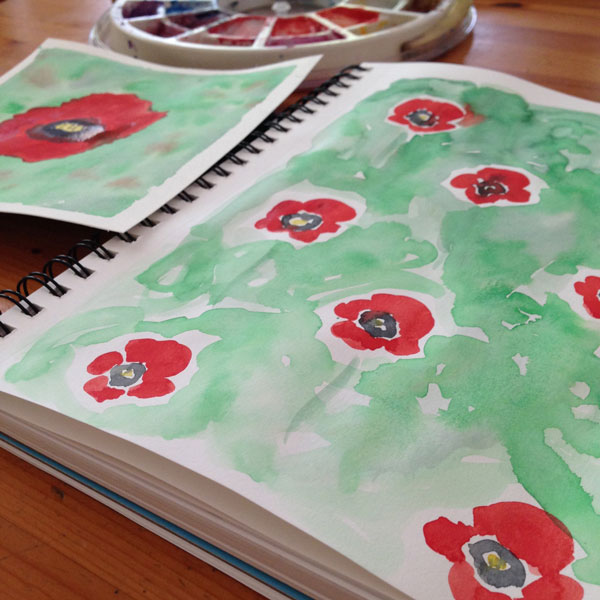
A few years ago, I went with my husband to MOMA (The Museum of Modern Art) to see an exhibit of Georges Seurat’s drawings and sketches. I was amazed at how many “studies” he did before he painted the famous “A Sunday on La Grande Jatte.” He painted the lake and the lady with the parasol separately several times. He also did many sketches of the people in the painting.
Yesterday I painted a pattern of Poppies in my sketchbook. Then I did one Poppy on watercolor paper. There were things I wanted to change and improve upon, so I did another version (above) of a single Poppy. I’m really happy with it which shows me that sometimes you have to study and practice a subject to get it right.

 mycreativeresolution.com