I’ve aspired to capture the ocean in watercolor for years. In December I made “painting the beach” my New Year’s project. The snow was falling outside, but I was inside painting waves. With each painting I learned and improved.
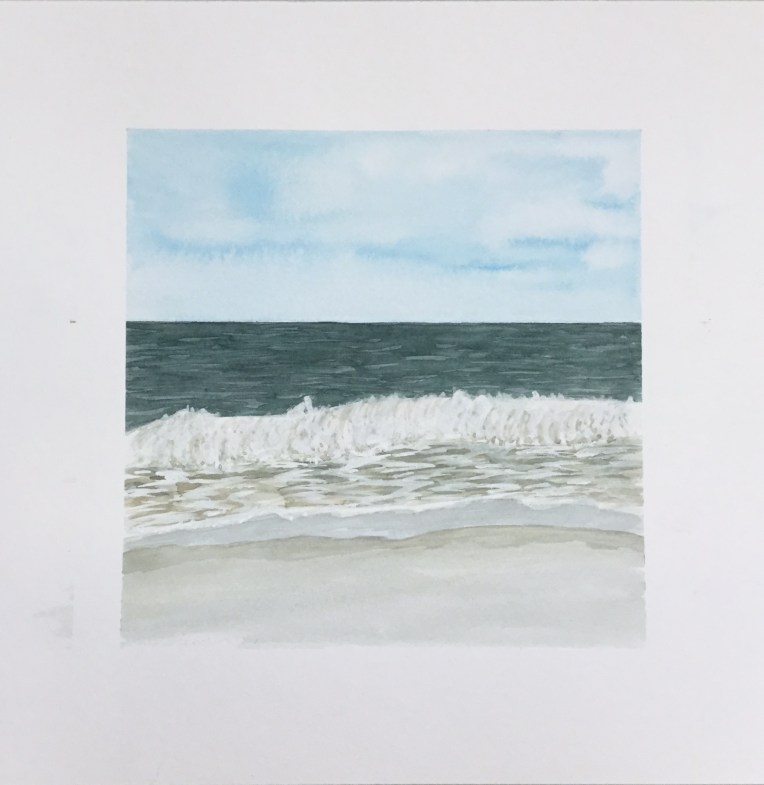
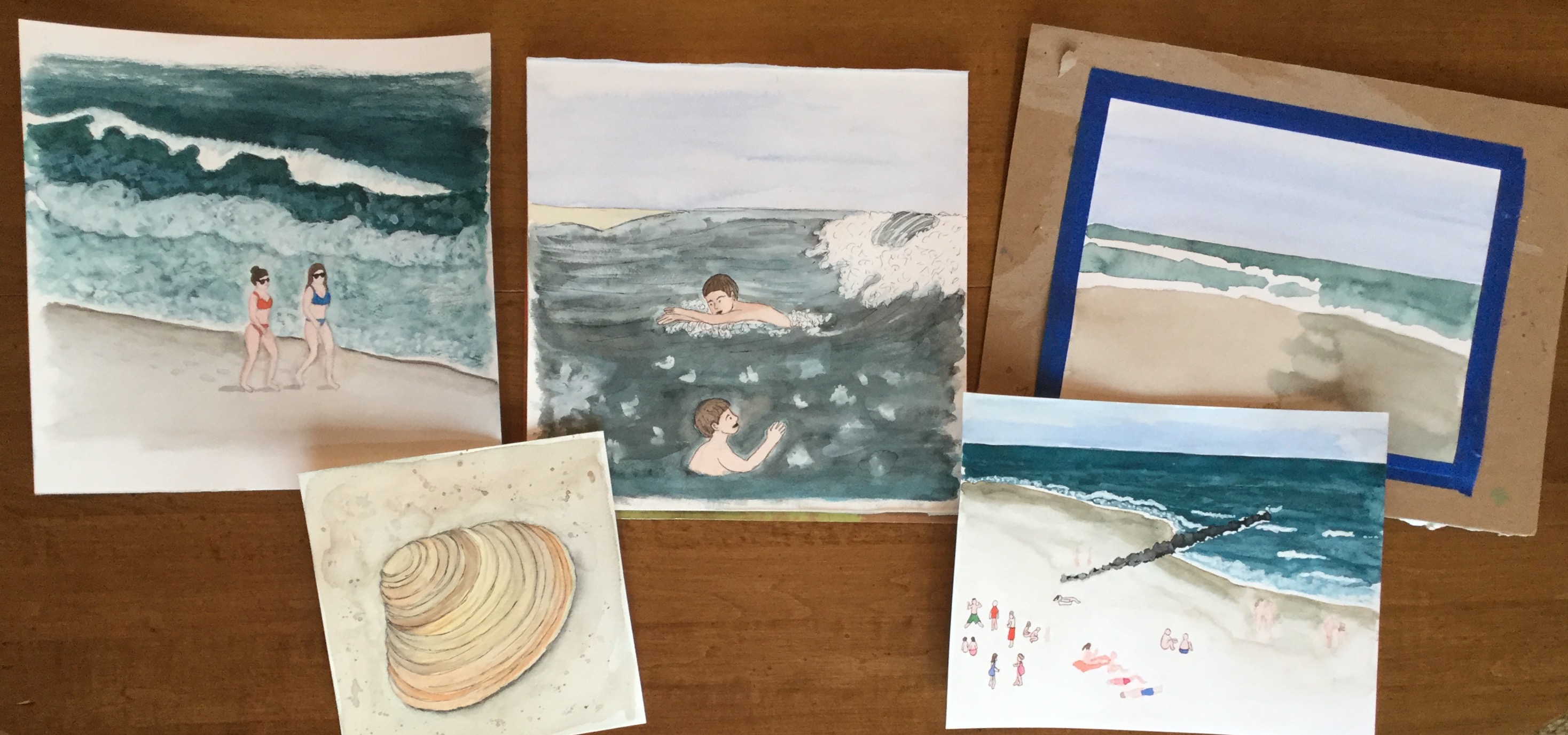
Some of my firsts in early January.
I watched a few YouTube videos and learned from others (and wrote about it here.)
I tried new tools and supplies and incorporated them into my process.
I’ve kept with it and over six months later I still often paint the ocean. In some ways I feel like I’ve found my thing.
Yesterday I was standing in the ocean, watching the waves break, watching the foam churned up by the waves wash in and out. It was surreal, like standing in a painting and all I could think about was white gouache.
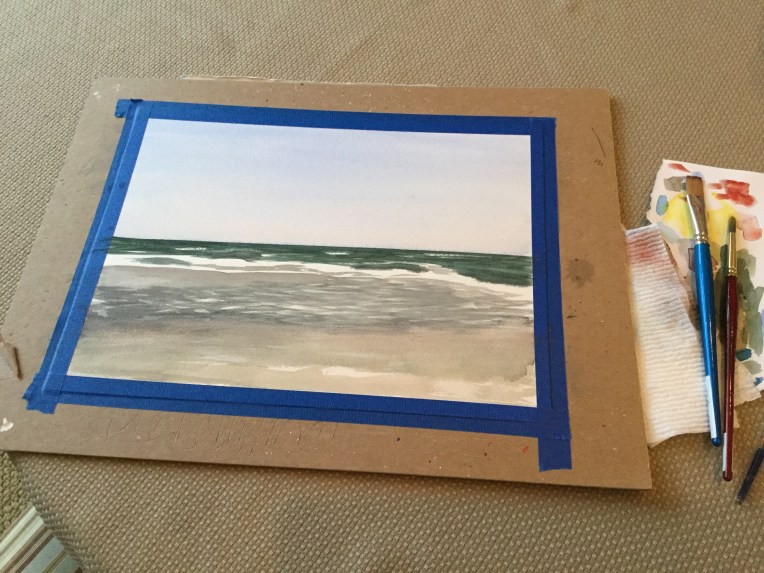
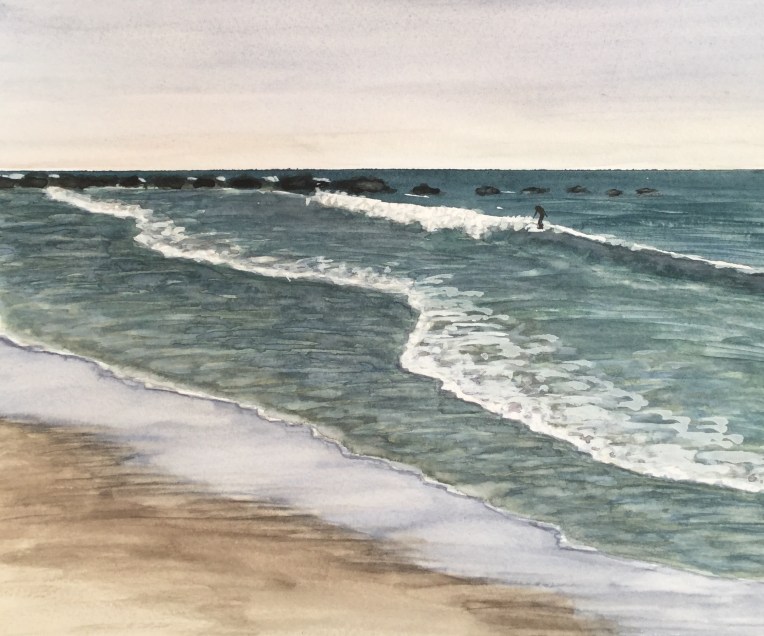
I was so happy to have time this weekend to start AND finish a new beach painting. On Saturday I painted the first layers.
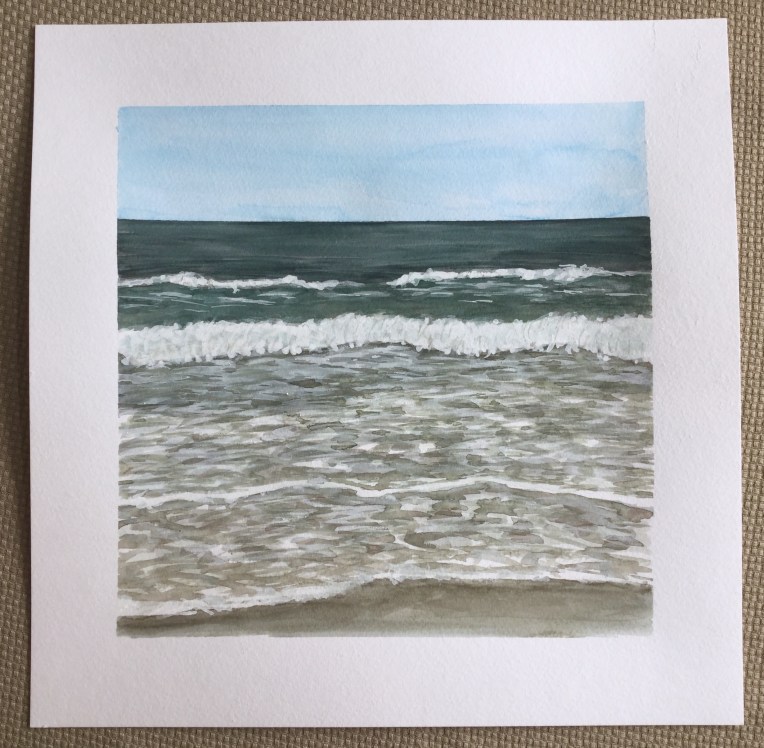
On Sunday I added the details – more lights, more darks. I use a lot of white gouache!
I wasn’t sure it was done, but I propped the painting up on a shelf and looked at it from across the room. What a difference compared to staring at it up close. From across the room I declared, “It’s done.” 🙂
When I think about the progress I’ve made in the past two months, there are a few things that standout out to me. First watching videos of other artists painting waves gave me some great tips (which I wrote about here.)
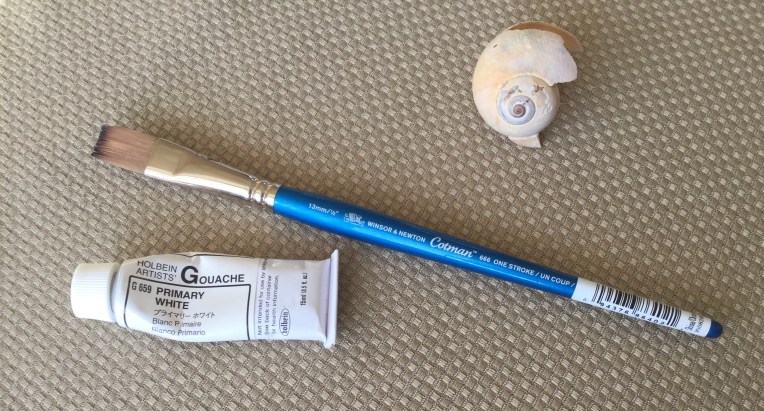
Second, one of the artists was using a flat brush so I bought a couple to try. The smaller flat brush has become invaluable to me.
Lastly, when I started using white gouache for the foam of the waves it was a turning point.
Want a dose of creative inspiration? Sign up for my newsletter “My Creative Collection” by clicking here. Learn more about the newsletter here.
Prints of my watercolor beach paintings are now for sale at shop.eileenmckenna.com. Take a peek!
There is a real benefit to painting the same subject over and over. You get better at it, and after trying different things, over time you develop a process. You develop a series a steps that you follow every time you paint.
Process for painting watercolor seascapes
Here is a summary of my process. Keep reading for links to more in depth resources.
Mix seascape colors – I mix blues, greens, and browns from ultramarine blue, cadmium yellow, and cadmium red.
Mark the horizon line. I use painter’s tape to achieve a straight horizon line.
Paint the ocean water closest to the horizon darker and bluer.
Paint the water in the cresting wave lighter and greener.
Paint the shallow water near shore brown.
Paint the sand. The sand is darkest closer to the ocean where it is wetter.
This post contains affiliate links to products I use and recommend. I earn a small commission whenever you buy using these links, at no additional cost to you. Thank you for supporting my blog!
I’m proud of the progress I’ve made since starting to paint the beach on January 1st. I feel as if I’m finally capturing the movement of the waves. But something has been missing. Around here on a beautiful summer day the beaches are packed with people. Sometimes we struggle to find a good spot down by the water.
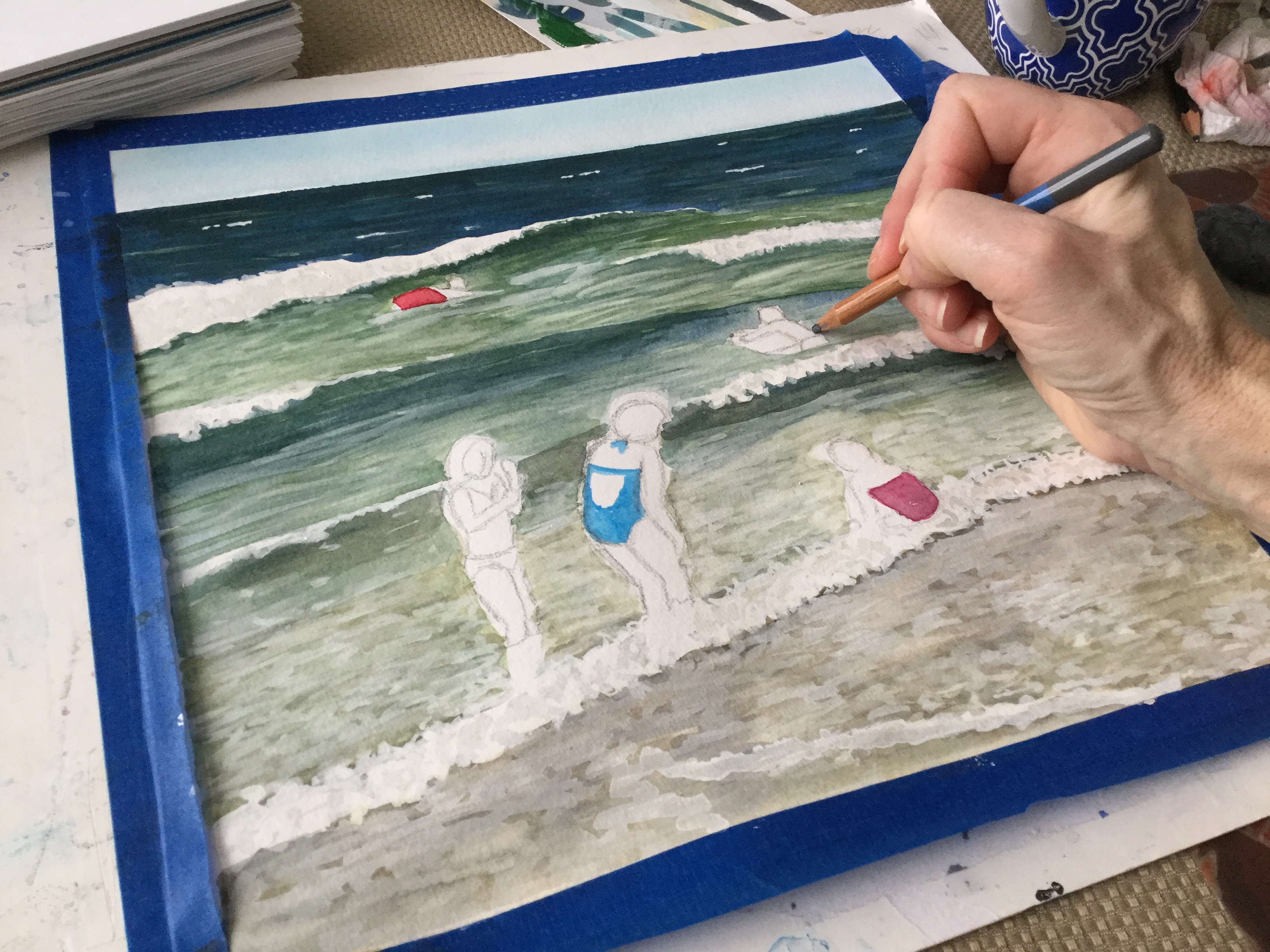
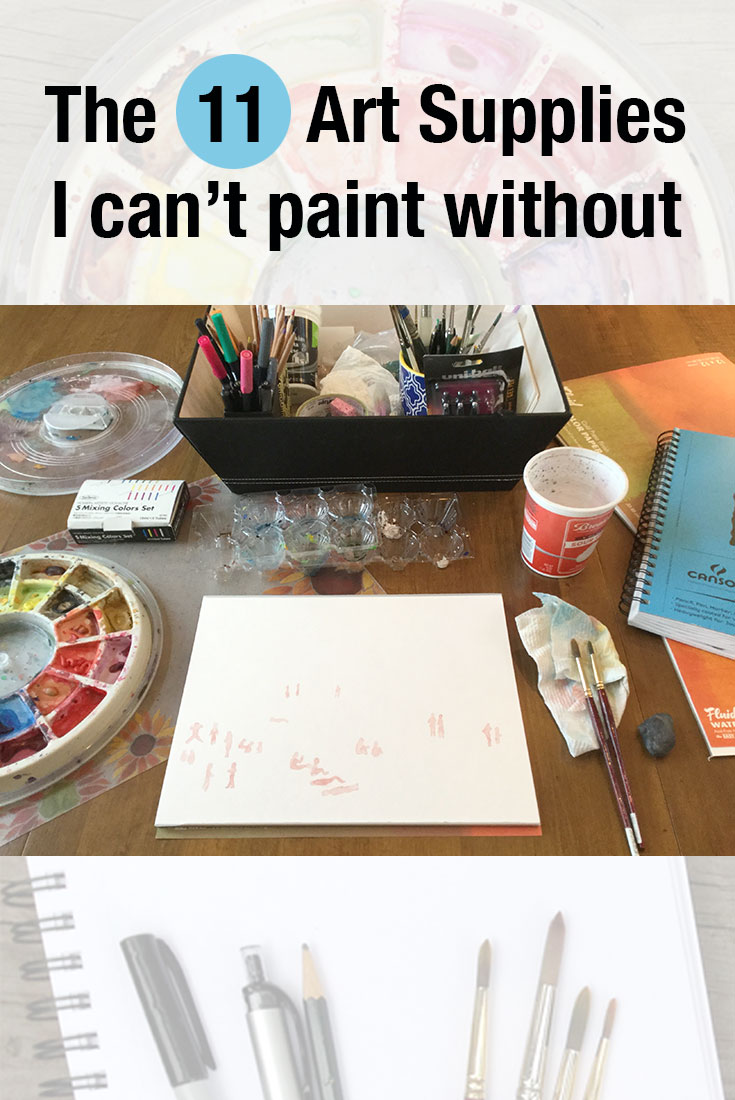
So, I’ve been collecting my photos that include people and trying to incorporate them into my paintings. Last night I did some loose brush sketches.
Today, I worked on refining the water in a painting where I had penciled in several people. Then I erased the pencil lines and using a watercolor pencil drew in the figures so I knew where to add paint. Figures don’t come easy to me and I have to work at a figure to get it right. Watercolor pencils are great because it’s easy to “erase” your lines by wetting them. You can mix the lines into the other colors or absorb them onto your brush.
I’m hoping if I focus on beach bodies for a while, I’ll see progress, like I’ve seen with my waves.
Here’s my favorite wave painting so far.
Have your read these posts yet?
Some posts contain affiliate links to products I use and recommend. I earn a small commission whenever you buy using these links. Thank you for supporting my blog!
My kids are asking why I am painting the same wave over and over. I’m practicing I tell them. My younger son also asked why I was painting the beach and not a snowy scene like what’s outside our window. I’m more into my beach painting project than a week ago. I’m not bored in the least and I feel like I’m learning so much by focusing on the same theme. Of course I don’t want it to be the same painting every time – and it hasn’t been. I did spend time today looking through our old photos for some subjects to paint – at the beach of course. 😉
For years I wondered how do you capture the ocean with paint? I decided to figure it out and painted the ocean over and over (and over). I learned and improved with each painting. Years later I still enjoy painting the ocean.
Here are my top tips for painting waves:
Study your reference photo.
To accurately paint or draw any subject you have to study that subject to really see the details – colors, lights and darks, shapes, composition, etc.
Identify the main colors and where the colors change.
Often the distant ocean is a darker blue. As the water gets closer it gets lighter and greener.
Near the breaking waves, where the sand is being churned up, the water is greener.
The shallow water close to the shore is brown.
Paint Horizontal Strokes
After painting your base colors use a flat brush to add horizontal lines. Horizontal strokes in your painting make things look flatter. You can add dark thin horizontal strokes on top of the distant ocean color (waves in the distance). Add thicker strokes for cresting waves near the break area (where the waves are breaking).
Use White Gouache to add waves in the distance, crashing waves, foam etc. White Gouache is thicker (more opaque) than watercolor and you can use it to paint over watercolor.
Painting Waves in the distance
Simply use a flat brush to add distant breaking waves
Painting Crashing waves
Use gouache to create the crashing waves. Your brush strokes should mimic the motion of the wave.
Add grey shadows within the breaking wave to add depth.
Use a dry brush or blot with a tissue to create spray coming off the wave
Painting foam
Paint the water near the shore brown and use white gouache to add the foam on top of it.
A dark brown line at the edge of the foam makes it look thicker and more realistic. You can soften the line with a damp brush.
Want to learn more about painting seascapes?
I share my step by step process for painting seascapes in watercolor.
Whoops! There was an error and we couldn't process your subscription. Please reload the page and try again.
This post contains affiliate links to products I use and recommend. I earn a small commission whenever you buy using these links, at no additional cost to you. Thank you for supporting my blog!
I’m really enjoying focusing on painting the beach this month. I kicked it off with a walk on the beach – of course taking lots of photos. I’ve taken the pressure off myself to finish a painting every day and post it. Instead I’m enjoying the process of mixing paints to find the right colors for the ocean and the sand, of starting one painting, and adding details to another, of trying different techniques to capture the depth and movement of the water, and of looking through our old photos to use as reference.
My goal is to sit every day for about an hour and paint or draw the beach. I wrote out a list of prompts, but am only using them as a guide on days I don’t know what to focus on. So far, 6+ days in (I started early), it is very relaxing, but I do worry that without the motivation/accountability to post a final piece, I’ll revert to old habits and not finish anything.
For now I’m going to continue as is. I may not have 6 completed paintings, but I’ve definitely learned a thing or two this week. I can re-evaluate how things are going next week.
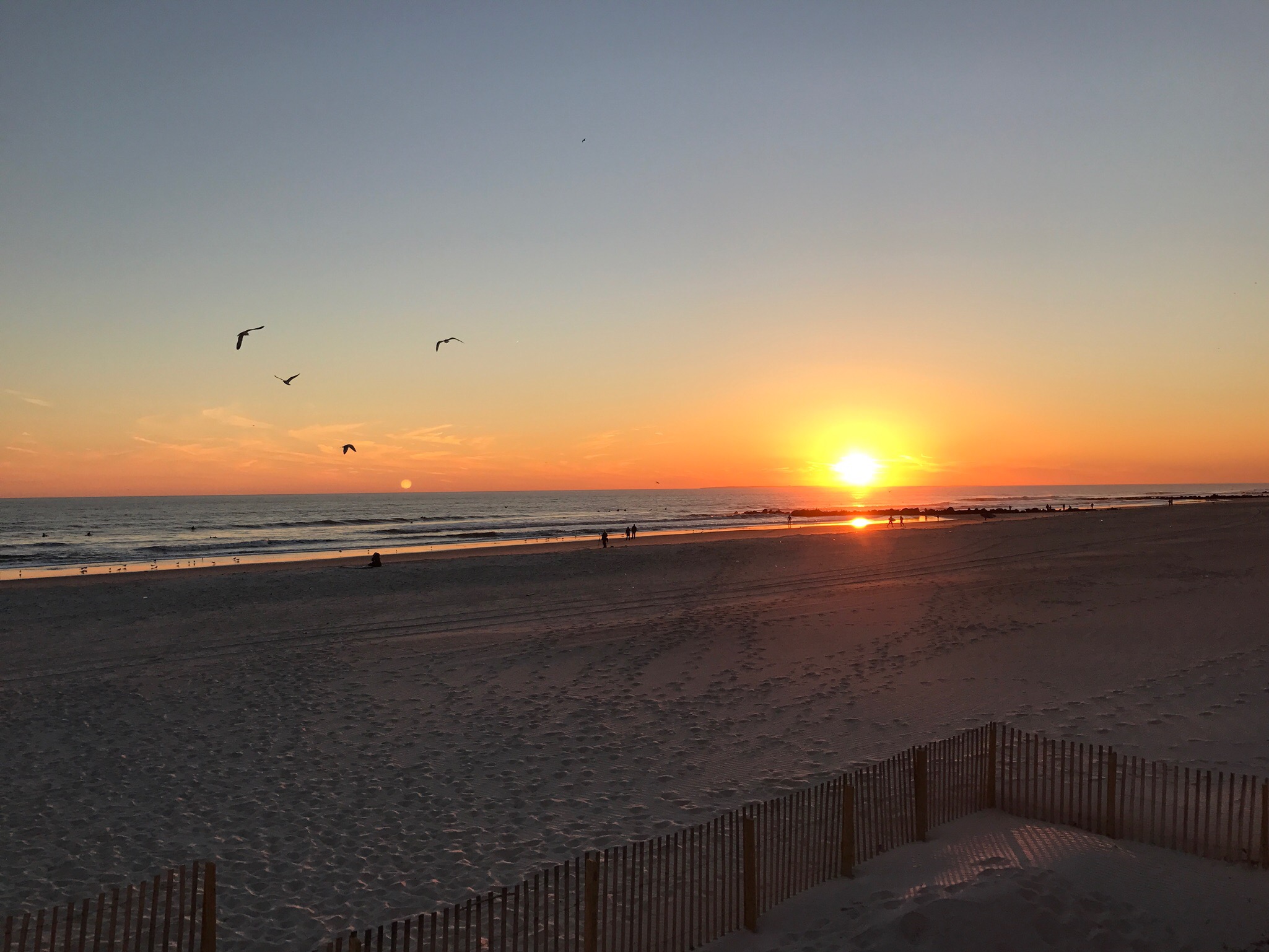
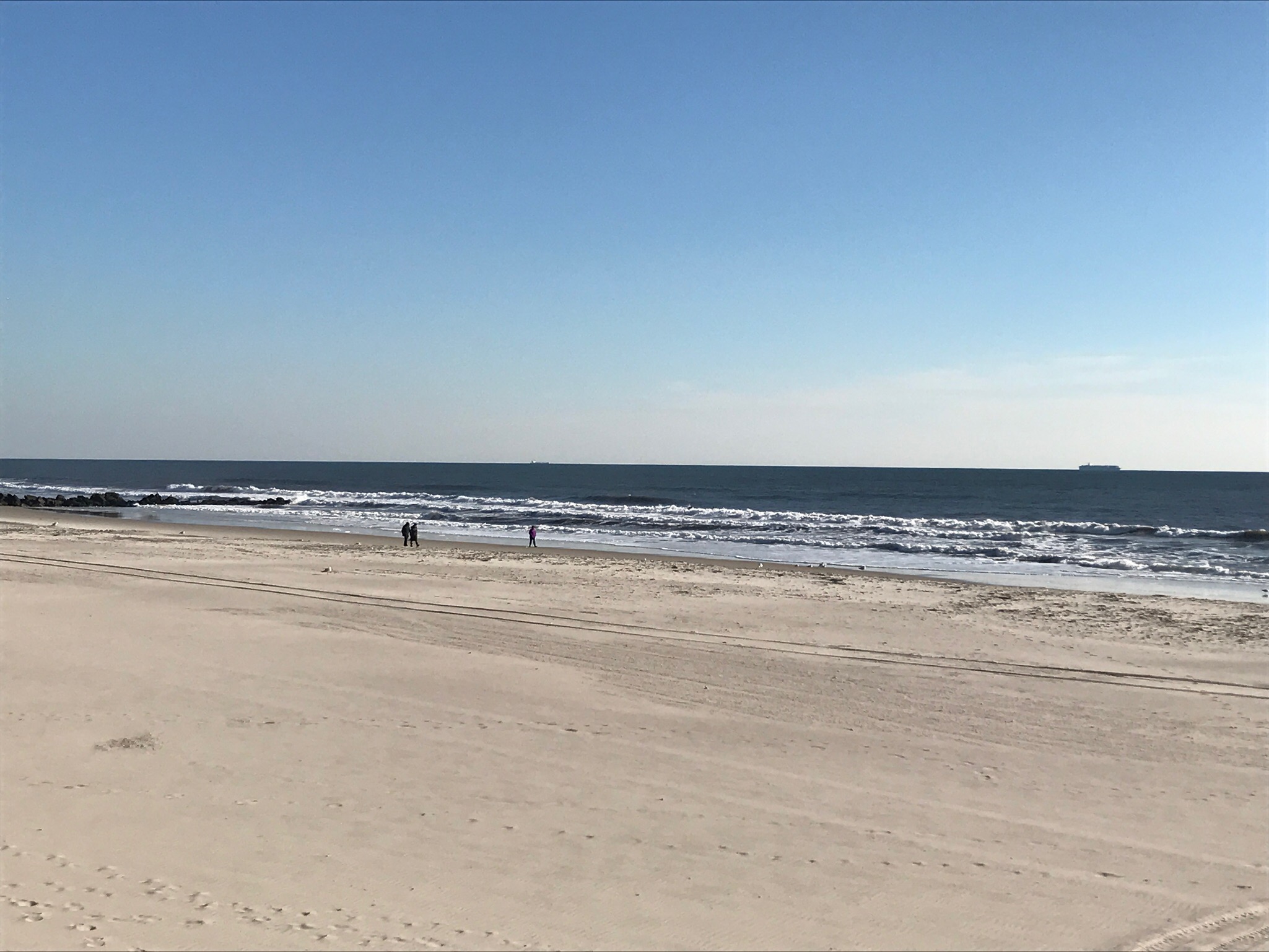
We visited the beach on New Year’s Day. It was the perfect way to kick off my January “painting the beach” project. This is the beach I grew up just a few blocks from. Having the beach as our “backyard” was a special thing that instilled in me a love for the beach and the ocean. It’s no wonder it’s often the subject of my paintings.









 I’m proud of the progress I’ve made since starting to paint the beach on January 1st. I feel as if I’m finally capturing the movement of the waves. But something has been missing. Around here on a beautiful summer day the beaches are packed with people. Sometimes we struggle to find a good spot down by the water.







 mycreativeresolution.com