The power of creative prompts

img_1756

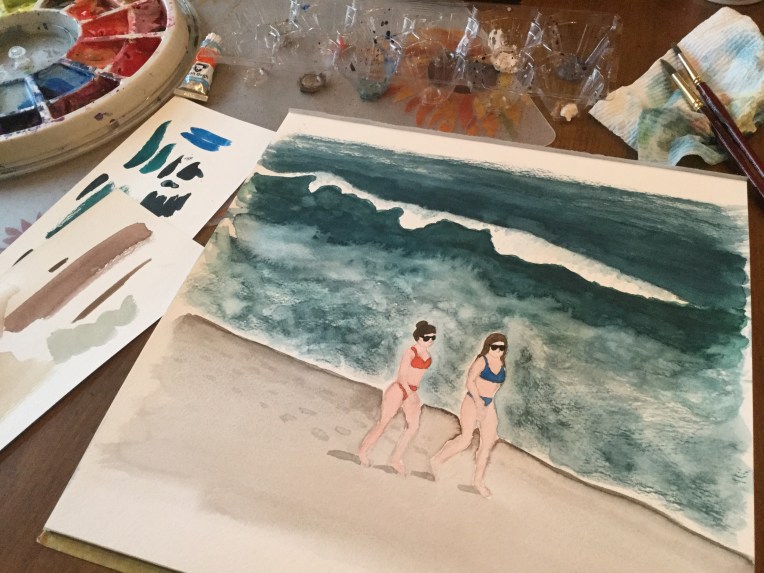
Happy New Year! I took the last few days “off” from my daily drawing and painting, but I’m gearing up to spend every day in January painting the beach.

I did spend a day or two getting a head start on this project. But there were more days where I thought about getting started but – without actually approaching the paints and paper – I didn’t know where to begin and quickly lost all motivation. Last month Marion who joined me in the Christmas countdown wrote – about following my prompts -that she liked not having to think about what to draw.

This really stuck with me and as I looked over the last two months, first following World Watercolor Group’s food prompts and then my own Christmas prompts, I realized how right Marion was. It makes it so much easier to not have to think about what to paint. Instead I would immediately jump to how I would interpret that prompt. Often I’d check the prompt the night before and have a plan when I started in the morning.

This week I struggled with motivating myself because even though I knew I wanted to paint the beach, I wasn’t sure how to get started. The “beach” is too broad. To overcome this stumbling block I wrote myself a prompt list for every day in January.

Focusing on painting the beach is something I’ve wanted to do for a very long time. For some reason I haven’t been able to do it beyond a painting here or there. When I saw how much I accomplished in November and December by following one theme each month I knew committing myself this month was part of the solution. That and telling YOU. Just like 3 years ago when I started this blog and told you I’m going to be creative on a regular basis. You hold me accountable and help me reach my goals. So thank you. 😊

What are your creative plans for the new year?

Lessons Learned on my Creative Journey

flowers
In the beginning, I paused every few months and wrote about what I’d learned so far about creating art, and about myself. Just 1 post shy of 300 posts I decided to reflect again. Here is what I’ve learned on my creative journey:

  1. There are ups and downs in a creative practice. Stick with it through the down times, an up time is coming, and you never know how high you’ll climb.
  2. Practice does make (almost) perfect.
  3. Accountability motivates you to get stuff done.
  4. You can retrain yourself to embrace better work habits.
  5. There is character and style to the “imperfect.”
  6. Share what you create, don’t create to share.
  7. Those beautiful Instagram posts only tell a sliver of a story. Don’t fall into comparing yourself.
  8. Interviews with other creatives tell much more of the story, and can be very real, and very inspiring. I love listening to podcasts.
  9. It takes time and work to develop your style.
  10. Capture the moments when you feel inspired – snap a photo or jot down a note, for later.
  11. Don’t wait for inspiration to strike or a plan to form, sit down and start creating, and things will start to unfold.

My other “lessons learned” posts:

What have you learned on your journey?

Creativity breeds more creativity

tulips
I’m already noticing a difference in my level of creativity, just a week after restarting my creative habits. It’s amazing how sketching every morning – often for just 5 minutes – leads to more sketching and painting later in the day. As Maya Angelou said, “You can’t use up creativity. The more you use, the more you have.”

My creative habits were derailed a month or so ago, when I was busy with a work project. I forget how much I need my own creative projects. Working as a web and print designer, I have the pleasure of being creative with work. The downfall for me is relying on work as my creative outlet. Last month’s work project was very consuming and creatively fulfilling. I barely drew or painted during this time. Everything was great until the project wrapped up, and a new work project didn’t immediately replace it. I was out of the habit of working on my own stuff, so I was left feeling somewhat empty. As I wrote about in this post, I was having a really hard time motivating myself to work on my own projects.

Thankfully I was able to get back to it, although it’s not always easy to stick to it. I need to remember this lesson next time work gets very busy – to make time for my own creative projects, and to stick with my creative habits.


9 Tips to Help You Keep Your New Year’s Resolution

9 Tips to Help You Keep Your New Year's resolution #resolution #new #years
My 2014 resolution was to be more creative. I came across a note I wrote six months in, “just pull out the paints.” Now, four years later, I realize keeping a resolution isn’t that simple. I know my success has been much more specific than that. There are ups and downs to any resolution. There are times when you are into it, and times when you aren’t. Sometimes it’s hard to just “pull out the paints” (or eat a salad, or put on your running shoes, or stay away from sugar, etc.). Here are some of the strategies I’ve used to help me keep my creative resolution.

9 Tips to Help You Keep Your New Year’s Resolution:

  1. Make a “positive” resolution. Your resolution should be about what you are going to do, not what you are not going to do. For example – Eat healthy vs. Stop eating junk.
  2. Research your resolution. Read books, magazines, blogs, or watch videos about your topic. Learning about your topic will motivate you, and help you on your journey.
  3. Tell people about your resolution. The more you tell others what you have resolved to do, the more you’ll feel committed to doing it, and it may help you connect with people with similar goals.
  4. Keep track of your progress. Keep a journal, or a blog about your journey, and include all your struggles and victories. Reread it from time to time to remind yourself how far you’ve come. The blogging community can be very supportive!
  5. Be realistic. Start small. If your resolution is running, you can’t expect to run 3 miles the first day out. And if you do, you’ll probably not want to run the next day! Start small, and build on it.
  6. Spend money. You’ll be more motivated and committed if you spend money. It’s the spending guilt! Buy new healthy snacks, new running sneakers, art supplies, or whatever items support your resolution.
  7. Schedule time. You can’t change your eating, or exercise, or paint, or meditate, if you don’t have time. Make your resolution a priority by scheduling time for it.
  8. Be specific. Although my resolution was to be more creative, on a weekly basis I write a list of specific goals and to do items within that resolution.
  9. Challenge yourself. Over time the same thing gets boring. After you achieve the first level of success, challenge yourself with new goals within your resolution – a new type of exercise, sign up for a race, register for a class, commit to making a new healthy recipe each week, or try another art form. Keep things interesting!

According to statisticbrain.com 41% of Americans usually make New Year’s Resolutions. Only 9.2% felt they were successful in achieving their resolution. I hope my tips help you keep your resolution this year. 🙂

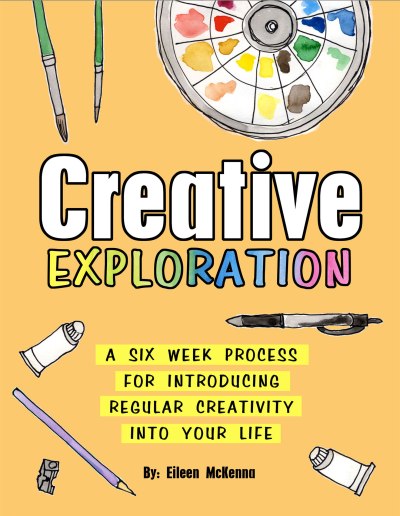
What are your creative plans for 2020? Hoping for a creative year but don’t know where to start? Try my book Creative Exploration: A Six Week Process for Introducing Regular Creativity into your Life – Develop a regular practice of creating, explore mediums and subjects in search of your thing, and experience the joy that creativity brings. Creativity is for EVERYONE! Talent is just a starting point.

Creative Exploration book -

Looking back and looking forward on my creative resolution

artistsetup

When I first made “my creative resolution” just before the start of 2014, my mission statement was: “Hoping to draw, paint, and create my way through 2014.”

I just wanted to be creative. I didn’t even know what I’d be working on. My interests were a varied list of painting, working with recycled materials, refinishing furniture, decorating my mantle, etc. The real goal was to be creative on a regular basis, and finish projects. I had a terrible habit of never finishing things. I made great progress in 2014, my interests became more focused on drawing and painting, and I finished almost everything I started, including some old projects.

At the start of 2015, my mission statement was: Continuing my creative journey into 2015.”

I knew I had come so far, and I wanted to keep growing, and learning. I wasn’t giving up. I had a long lists of goals, although this list, wasn’t as varied as the year before.

Things I want to try in 2015:

  1. Linocut
  2. Lettering
  3. Online workshops
  4. Painting on dark paper
  5. Doodling
  6. Video
  7. Patterns
  8. Maps
  9. Digital Brushes
  10. Watercolor Parties

Most of these items, I tried at least once. Some, like designing patterns (surface design), I adopted as a monthly goal. See all my 2015 patterns here.

My mission statement for 2016 is more of a declaration of me: “Painting, Illustration, Surface Design, and Animation.”

I want to continue painting, working on my illustration style, and designing surface patterns. And I want to learn and grow in the area of animation. See my recent post on exploring animation here.

It’s important to look at where you’ve been, and plan on where you want to go. These two years have been amazing for me. I’ve grown so much on this creative journey. I’ve met amazing friends. It has made me feel happy and fulfilled, and I’m excited about what 2016 will bring. 🙂

A busy holiday season and how I set myself up for failure

  
After Halloween, I wrote a long list of all the creative things I wanted to accomplish before Christmas. I wanted to make paintings as gifts, do Christmas crafts, and on and on.

I thought with Christmas two months off, there was plenty of time. I was so wrong. The list was totally unrealistic. My life is pretty busy already with three kids, a husband, my own business, running, etc. During the holiday season things obviously get busier with parties, trips to the city, decorating, shopping, baking, etc. 

It’s important for me to recognize the reason why I failed to get these additional things done. Because my first instinct is to feel bad about it. When I realize there wasn’t time I feel better. It’s why most people who create for Christmas (professionally) start in July. 

I will try that this Summer, if I can get into the holiday spirit. I’ll also try to be more realistic and plan ahead – way ahead!

Focusing and following through

newtree
My last post was about “Coming up with Ideas.” A few of you commented that you have no shortage of ideas. This makes sense as Maya Angelou famously said,

“You can’t use up creativity. The more you use, the more you have.”

The “ideas” post was from the early days of my creative resolution. While reading through my old posts, I realized that focusing and finishing were recurring themes. Previously I wasn’t successful with my creative projects because I was always starting and stopping, and never finishing. Which left me feeling discouraged.

I started this creative journey in 2014, by finishing several old projects and doing several projects that I had always wanted to try. Accomplishing these things made me feel good, and so I kept going, with new projects.

I’ve come a long way since then. I try to draw or paint every day. I always shy away from the word “daily” because I’m more likely to paint and draw a lot for a day or two. Do nothing for a day or two, and then get back to it again.

I keep a notebook of “to do” lists and project ideas. I check off things as I go, and look back to see if I forgot anything. I’ll keep an old idea on the list for a while. Of course, I don’t get to everything, but it feels amazing to accomplish something that’s been on my list for months. The percentage of unfinished projects is much, much lower than it was before MCR.

Recently I wanted to be creative, but didn’t know where to start. I literally felt anxious. I sat down and wrote out all the ideas buzzing in my head. When I was done, I felt like I could breath again. Just writing the ideas down, cleared my head, and helped me prioritize. And then I started to create. 🙂

Practicing on scrap paper before diving in

finalcone
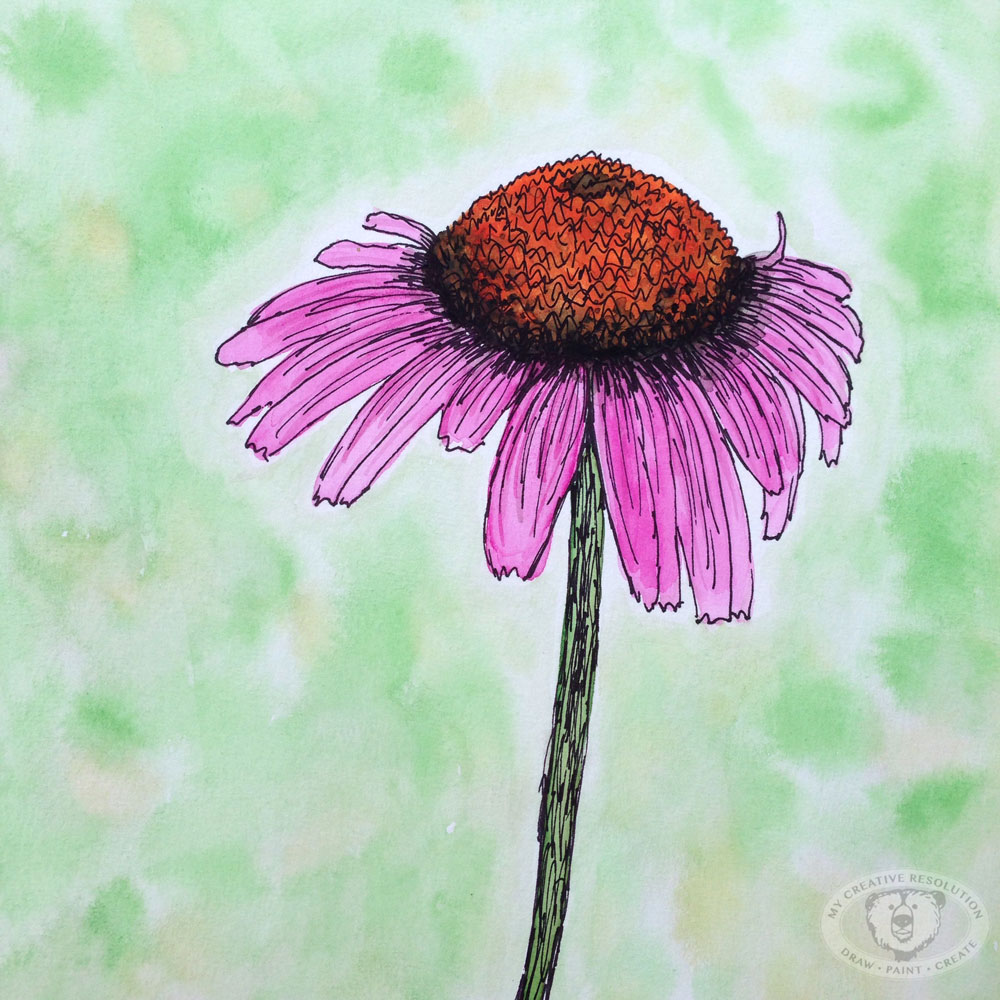
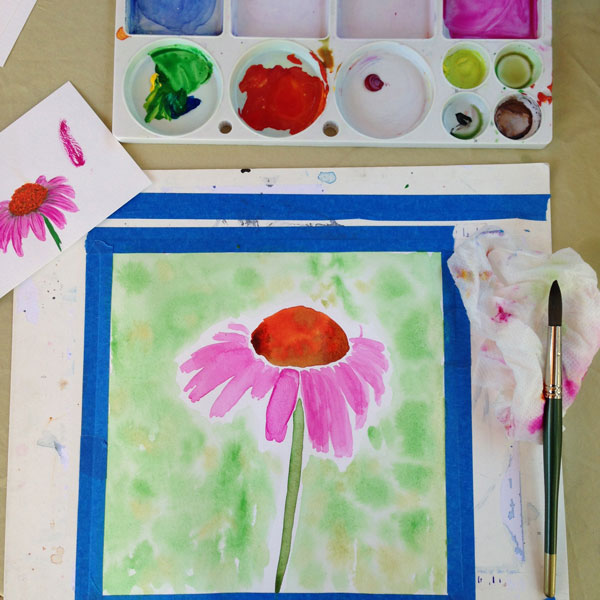
After the debacle of the sunflower. I decided to practice on a scrap piece of paper before starting a painting of an Echinacea flower. This way I would have a plan on how to paint it.
scrap

The scrap paper coneflower came out pretty good, so I started my painting. I loved the start of this painting. But when I went back to add some details I felt like I messed it up. Why is it that working quick can look great, but sometimes when you work harder at something (more deliberately), you overwork it, and ruin it?
startofthecone

So here I am with a scrap of paper, that several people love, and an unfinished painting. And I am stuck.

I wrote the above 4 weeks ago! Ironically yesterday’s post was “Forcing myself to finish.” This Echinacea flower project is a great example of me not finishing – I felt I had ruined it, didn’t know how to proceed, so I stopped. Two days ago, I pulled it out, added details in ink, and declared it finished.

No matter how a project comes out it feels great to finish!

Forcing myself to finish.

nodiving
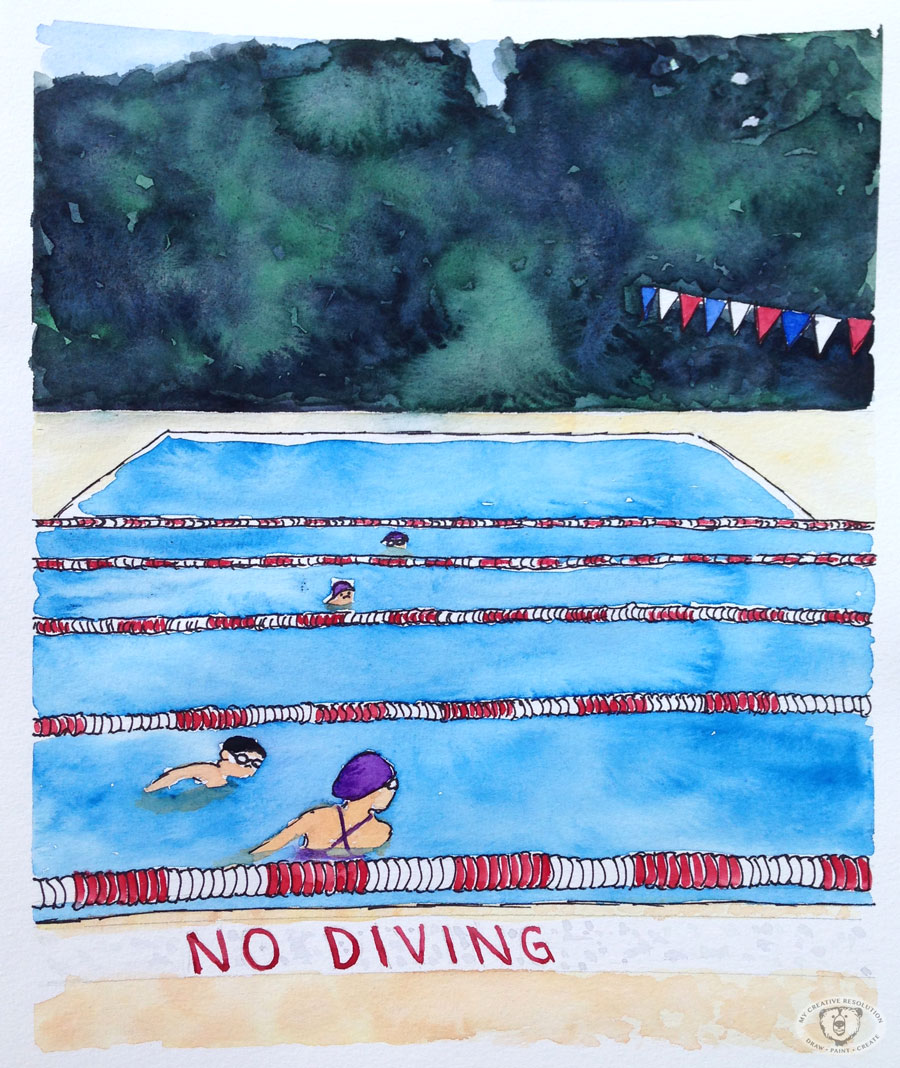
One thing I’ve learned about myself as an artist, is that I dive into a project with enthusiasm. I think it’s the Aries in me [read more about that here]. It’s great for starting a project, but for me, a couple of things can get in the way of finishing a project.

  1. I lose enthusiasm.
  2. A new project grabs my attention.
  3. I get worried about ruining a project.
  4. I’m not sure how to proceed because I haven’t planned things out.

When I started my creative resolution I forced myself to finish a bunch of forgotten projects. I also forced myself to finished most of the new projects I started. And I adapted to work within my personality. Most projects I work on, I finish within a few days – before the enthusiasm fades or I get sidetracked (or I get paralyzed worrying about ruining it or I start to overthink the next steps).

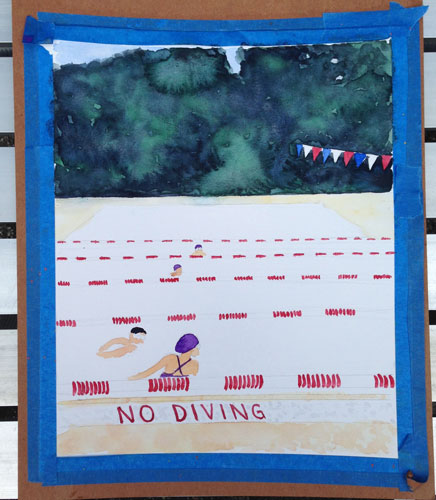
Recently I started this pool painting. I forced myself to paint, what I thought of as the hardest part of the painting – the lane lines – before I left for a short trip. I knew that if I could get that step out of the way and left only the pool water and a few minor details, I’d be much more likely to finish this painting when I got back.
nodiving1diving2

Some of the valuable lessons I’ve learned in the last year and half, have less to do with painting and technique, and more to do with how I work. And how to get things finished.