New Picture book ~ The Claddagh Fairy

This week I published a children’s picture book called The Claddagh Fairy. Look how cute she is!

The Claddagh Fairy by Eileen McKenna Children's Picture Book Irish Ireland St. Patrick's Day

Book Description: Anna’s Grandpa gives her an Irish Claddagh ring. He sends her a jewelry box from Ireland with a fairy inside. Anna’s ring brings the fairy to life and teaches Anna an important lesson about friendship, loyalty and love. This illustrated picture book will delight children as they learn about Anna’s grandpa’s homeland Ireland and the meaning of the Irish Claddagh ring.

I created the artwork and wrote the book back in 2014 but for some reason I stalled. That was 10 years ago! If I had to guess, I probably lost confidence in myself. After that, anytime I have had extended time off I’ve added The Claddagh Fairy to my to list. But for 10 years I kept pushing it to the back burner. It was at the top of my list – yet again – but I told my friend Connie I wasn’t going to work on it. For not the first time, Connie said, “You really should publish it. It’s all done!” We all need a friend like that!

That afternoon I went home, pulled The Claddagh Fairy out, made a few slight edits and ordered a draft on Amazon’s KDP site. When I got my draft, I made some tweaks to the artwork and after, 10 years, finally clicked publish!

The Claddagh Fairy is special to me because it is inspired by my grandpa, Michael Dennehy. We called him Grampa. Grampa was the sweetest grandpa, with the cutest brogue. He was from County Cork, Ireland. I spent a lot of afternoons with him as he told me silly stories of characters with names like Nan Pike and Patsy Galoop. He passed away when I was in high school and I still miss him.

Processing…
Success! You're on the list.

One Brush, Three Colors and done!

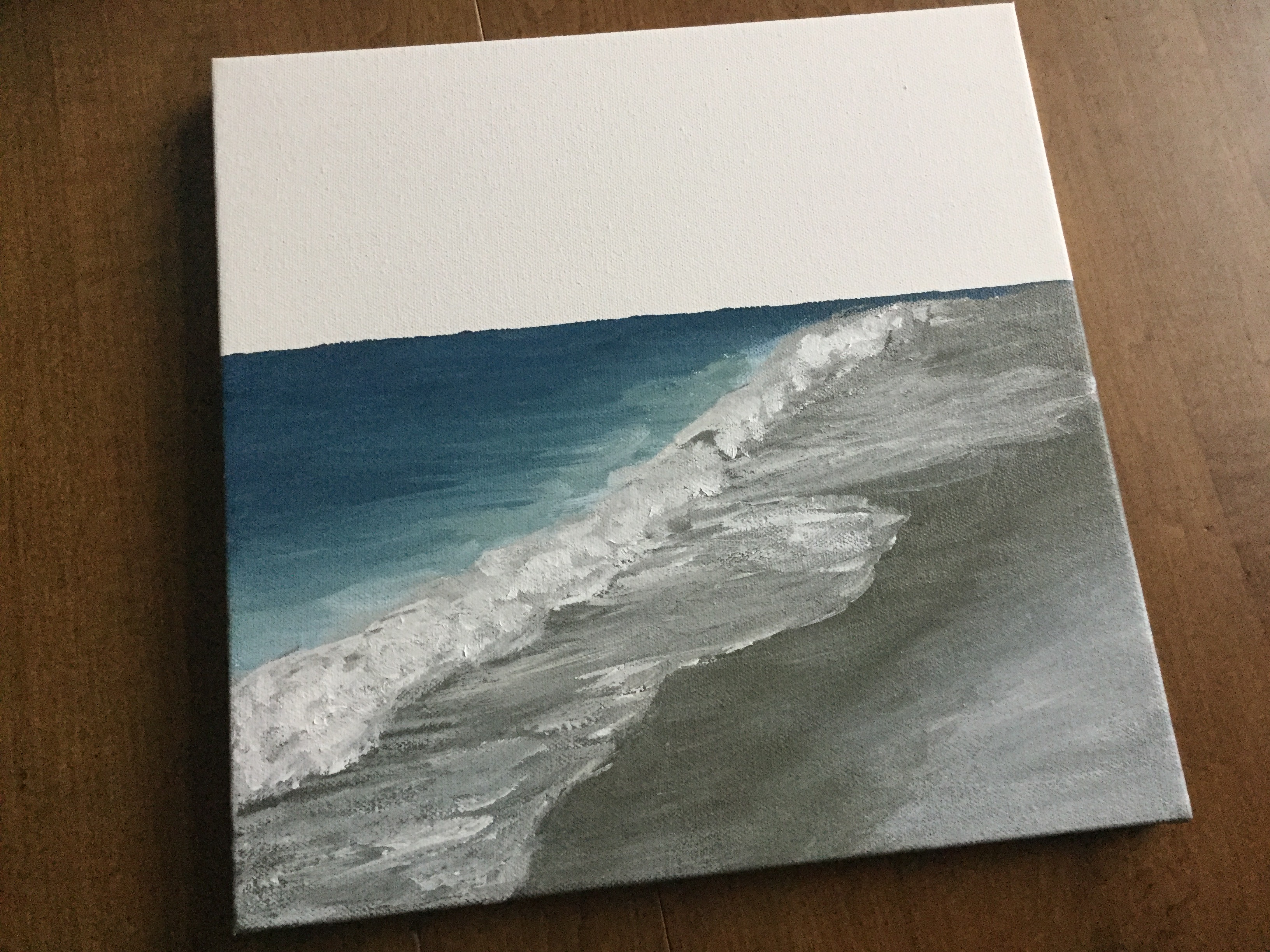
I just finished this painting. I did the entire painting in one sitting with three colors and one big brush. It felt so good to have an idea, follow through and finish. Recently my creative practice has been sporadic. A lot of the creative things I do are tied to work or school. Did I tell you I’m back in school?! I just finished my first year in a Masters in Art Education program. But still, excuses, excuses. 

Acrylic ocean seascape blue gray day

I’ve been ecstatic about this painting since I finished it – which got me thinking. Things are slowing down a bit for summer. This small canvas is so doable. Maybe I could commit to doing one a week? I always do well with a goal and a plan, especially if I do some art supply shopping to motivate me. 

Summer is about 10 weeks, so I’ll aim for 10 canvases but the real goal is to paint every week. I need to take stock of my supplies and make a list. Then it’s a trip to the art store – fun!

I need to remember to be open to inspiration. The painting above was inspired by a recent walk on the beach. That’s my favorite way to work – capturing inspiration when it strikes and painting it.

Any summer creative goals? I’d love to hear!

three color palette for acrylic seascape

Processing…
Success! You're on the list.

Soaking up Inspiration

Soaking up inspiration for the next seascape painting
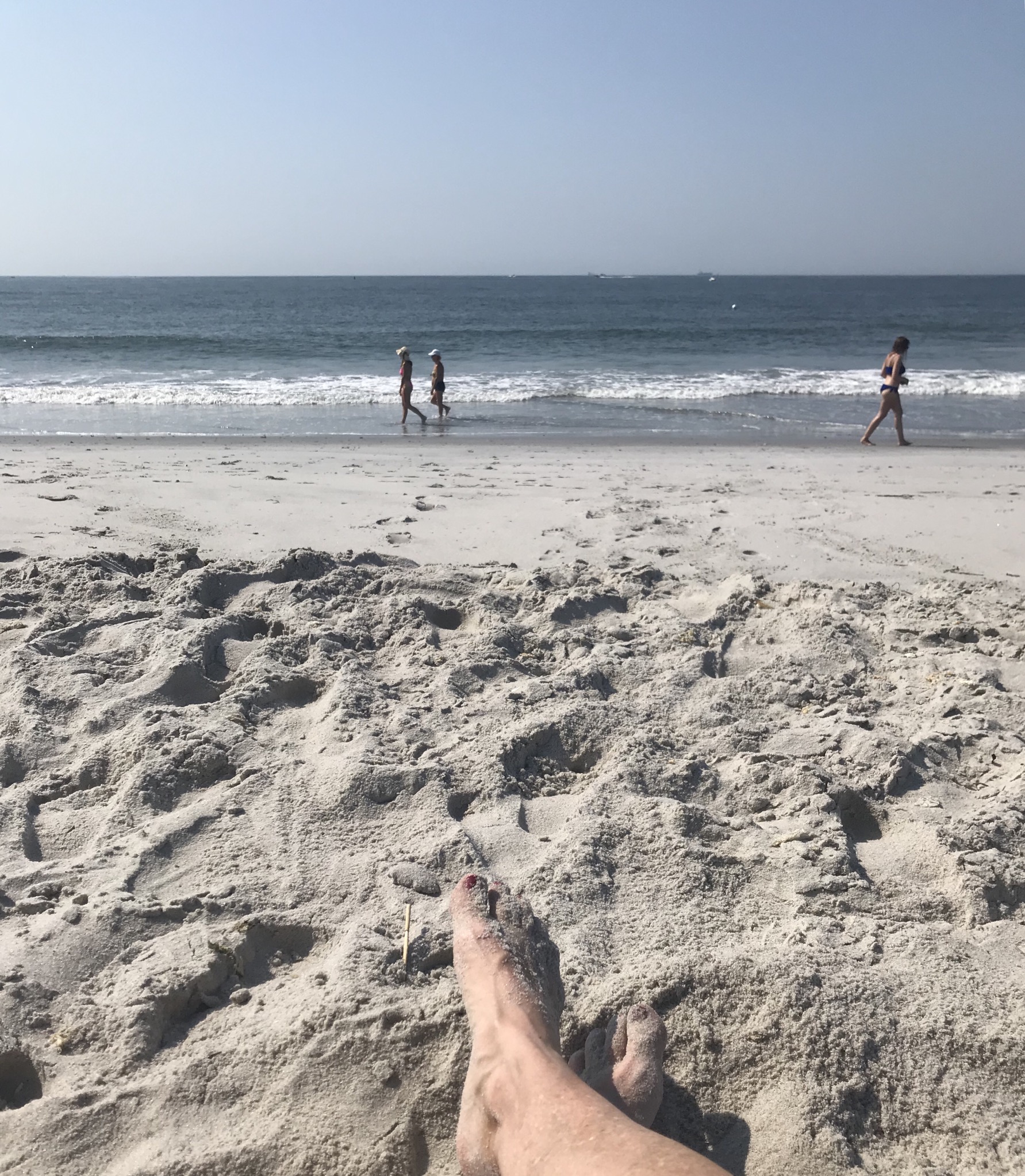
It’s hard to know what I enjoy more, a visit to the beach or time spent painting. Recently I did both in the same day. Obviously it was a good day.
Beach day by Eileen McKenna
Beach day by Eileen McKenna shadow in the foam
The beach visit was an early morning one with my husband and coffee. Love those.

The painting session – which took place at home later on – was with acrylics on canvas, instead of my usual watercolor. I’ve been itching to get back to acrylics. I worked on a canvas I had already started, and was able to finish it, which felt great.
Acrylic seascape painting by Eileen McKenna

I’m looking forward to another day like this one!

I share creative tips and inspiration in my weekly newsletter. Sign up now and get the following freebies:

  • Watercolor Quick Start Guide – everything you need to know to get started in watercolor
  • 50 ideas on what to draw or paint

Sign up for the newsletter here.

More Confidence with Acrylics on Canvas

More Confidence with Acrylics on Canvas | tips on painting seascapes
I’m back to painting with acrylics on canvas (instead of my usual watercolor). It was last May that I bought a stack of small canvases and painted seascapes on them – learning with each set. Since then, I’ve dabbled here and there with acrylics.

This time around, I feel more confident and freer. I was thinking about why that was, and I figured it out. When starting with a brand new canvas, I feel pressure about the final product. Since I’ve been reusing old canvases, it has felt like play. I feel free to learn and experiment. I’m not as worried about the final product or about making mistakes. And if I don’t like something, I’m diving back in to change it. In the painting below, the horizon was so high up the perspective felt weird and unnatural, so I lowered it.

Years ago in a drawing class I created a drawing of a bear that we loved. It was an awkward size and was expensive to have custom framed. After that I began mapping out the frame sizes of my drawings before even starting them! The pressure of creating frameable pieces paralyzed me. I was afraid to make a mark and ruin a drawing. When I realized what I had done to myself, I began approaching my drawings and paintings as play. It was so freeing. But it’s easy to feel free with paper. The weight of a canvas did the same thing to me!

I just went to the art store for new paint and brushes. Eventually I’d like to create a 2 panel painting for over the couch, but I didn’t buy the canvases yet. I’m going to continue playing with the canvases I have, until I feel ready.

Prints and original seascapes are available on my website shop.eileenmckenna.com Come visit 🙂


My Creative Collection a creative newsletter
Want a dose of creative inspiration?
Sign up for my newsletter “My Creative Collection” where I feature artists and makers, and link to inspiring art, design, and craft, inspiring places, interesting books, movies, and more. It’s a collection of all the things inspiring me, delivered to your inbox every two weeks. Click here to sign up.

10 “How to” Posts on Painting, Graphic Design, Creativity and more!

10 "How to" Posts on Painting, Graphic Design, Creativity and more! | acrylic painting watercolor tutorial diy round up post
It’s still amazing to me that I made a commitment to be creative, created this blog to hold myself accountable, have continued with it for over five years, and have published over 600 posts! This from someone who previously couldn’t finish a creative project. Here’s a round up of my best “How to” posts.

How to Design Invitations. I’ve been a Graphic Designer for over 20 years. I wrote this post to share the process of designing invitations. Designing invites has always been one of my favorite projects. Visit my Etsy shop for invitation borders, backgrounds, and clipart that make the invitation design process easier!

How to Design Invitations | DIY Invites | Invitation Tutorial | Easy Invites

How to Paint the Ocean. For the last few years I have dedicated myself to capturing the ocean in watercolor. This post shares my step by step process and my secret ingredient.
How to paint the ocean in watercolor and gouache | tutorial | step by step instructions | painting tips 

Transitioning from Watercolor to Acrylics was such a challenge and I’m still learning every time I pull out a canvas. In this post I share the top differences between the two, to help others make a more smooth transition.
Going from watercolor to acrylics, painting acrylic seascapes

Easy Forest Watercolor Project – is a great one for watercolor beginners. Create an interesting forest and learn and practice five watercolor techniques along the way. It’s actually one of my most popular posts and I’ve heard such nice things from the people who have tried it. There was even a group at a library that tried it.
Easy Forest Watercolor Painting for Beginners | Learn watercolor techniques! #winter #forest #watercolor #beginners

Creating Repeating Patterns. Early on in my blogging days I began noticing the art of Surface Design. This post explains how to turn your art into a repeating pattern.
How to create a repeating pattern in Photoshop. For fabric prints, gift wrap, wallpaper and more.

Creativity is for everyone. For me being creative is less about the final product and more about the joy I get from being creative. I wish I realized sooner that talent doesn’t mean much. It’s just a starting point. If you have the desire to be creative and work at it regularly, your skills will improve.
Want to be creative? Start here! creative inspiration | how to be creative

Winter Birch Tree Painting. I wanted to add wintery art to my living room so I created these birch tree paintings in acrylic and shared my process in this post.
Easy Acrylic Birch Tree Painting #beginner #painting

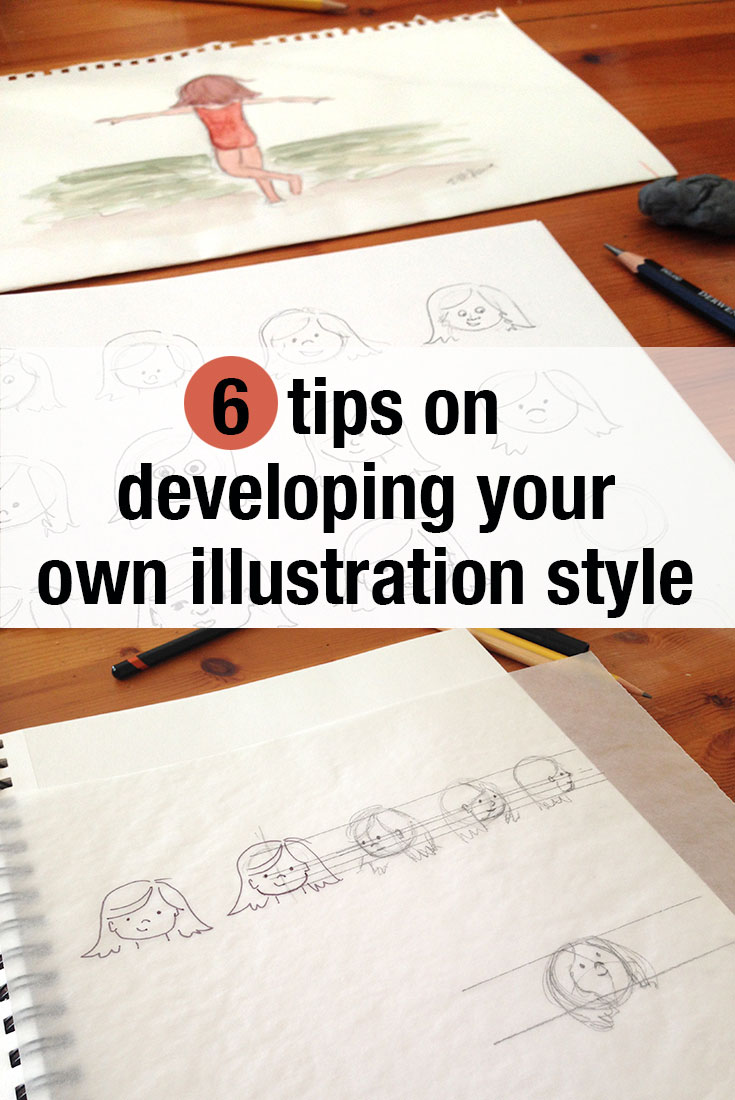
Developing your own Illustration Style. When my kids were small I desperately wanted to illustrate a children’s book. But, not only were my skills not there, but I didn’t have a style. I scoured the internet looking for ways to develop my own style. In this post I share what I learned.
6 Tips on Developing your own Illustration Style 

Ways to Find Inspiration. It’s very rare that I don’t have ideas. For me time is more of a struggle, as well as following through on ideas. This post shares ways to find inspiration.
10 Ways to come up with ideas for your creative projects

Logo Design Process. I shared a peek into my life as a graphic designer in this post about designing logo.
Logo Design Process

Want a dose of creative inspiration? Sign up for my newsletter -“My Creative Collection.” A collection of all the things that inspire me, in the hopes of inspiring you! Sign up here!
My Creative Collection

Learning Acrylics

Acrylic seascape by Eileen McKenna

In May I switched from painting in watercolor to painting acrylic seascapes. I painted ten 12” x 12” canvases – intent on getting comfortable with the different medium. It was so frustrating in the beginning, but with each painting I learned something. I’ve pulled out the acrylics again – this time with bigger canvases, and I’m reminded of what I learned so far.

What I’ve learned about acrylics:

  • A coat of gesso makes the paint go on easier
  • When your brush starts to split – you need more water
  • When your brush is drippy – that’s too much water
  • Blend the colors next to each other for a more natural look
  • Blending works best when both colors are wet
  • It is better to work when the paint on the canvas is wet and you have plenty of your colors mixed and ready
  • Add highlights by adding white paint (or lighter paint) to your brush and blending it with the wet paint on the canvas
  • To thin the paint and overlay colors use  acrylic gel medium.
  • Use little canvases (or a canvas pad) to test color mixes
  • Painting in acrylic involves more set up and prep than watercolor. And more clean up.
  • Using a sheet from a palette pad – taped to your palette – makes clean up easier!
  • It is not as easy with acrylics to make a quick fix or change
  • Using painter’s tape for a straight horizon line presents some challenges. The paint can accumulate at the tape creating an edge.

Click here to view my collection of watercolor and acrylic seascapes.

Want a dose of creative inspiration? Sign up for my newsletter “My Creative Collection” by clicking here. Learn more here.

This post contains affiliate links to products/brands I use and recommend. I earn a small commission whenever you buy using these links, at no additional cost to you. Thank you for supporting my blog!
Know your Subject

Knowing your subject when painting | painting the ocean
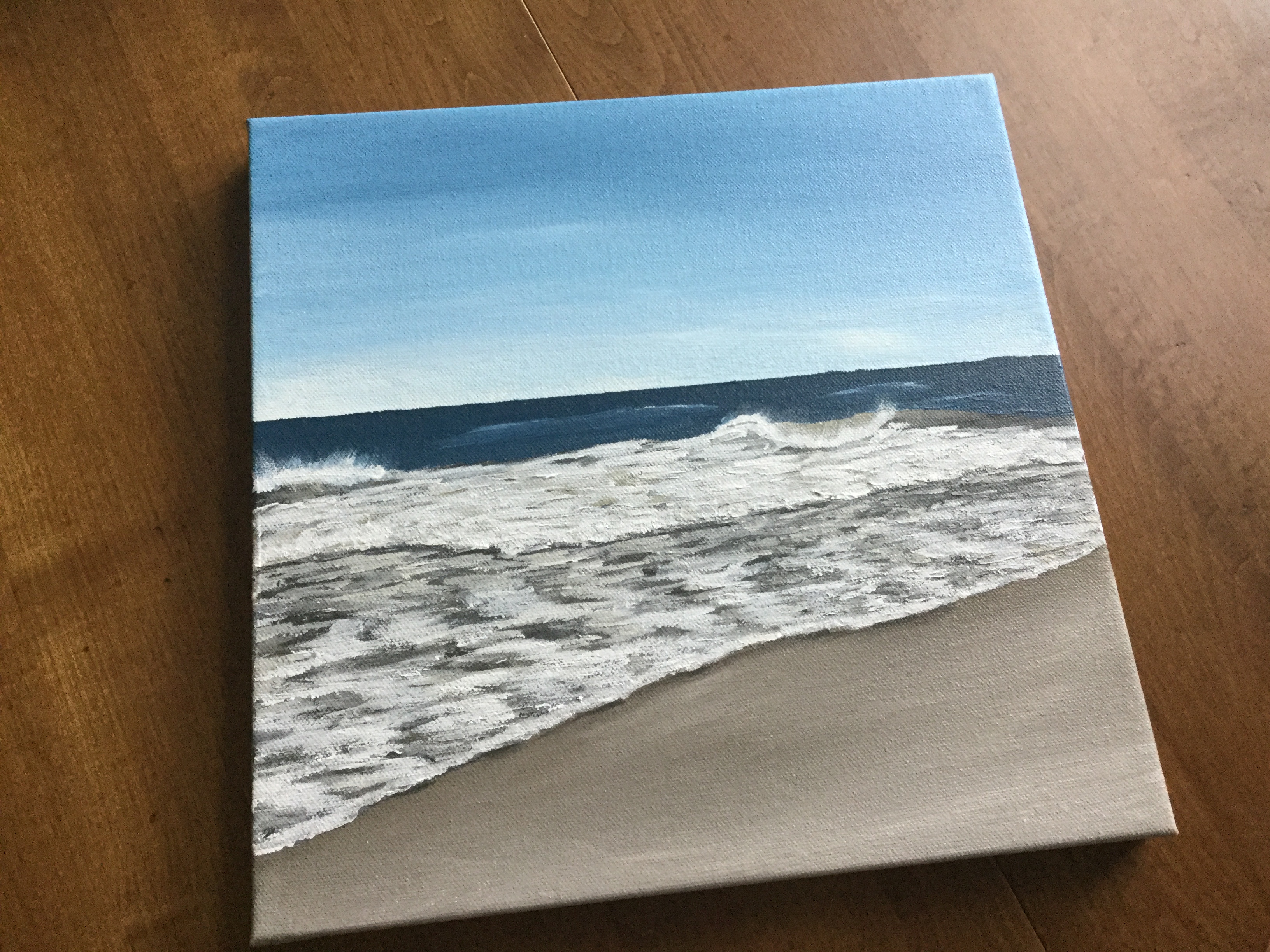
I often think about an online class I took by Val Webb called “Drawing Children.” At the time, I was amazed at how well Val knows the nuances of the faces and figures of children. Now as I paint the ocean – almost exclusively, mostly in watercolor, but recently in acrylics – I think about not just the techniques to make the painting look realistic, but the characteristics of the ocean.

As I was painting the water, specifically the foam at high tide, I was painting and pulling back the strokes, because I was thinking about how the water is being pulled back by the tide. This is something you wouldn’t know just by looking at a photo. All the time I’ve spent at the beach might be making a difference in my painting. Last summer, after painting the ocean all winter, I looked and observed the water differently than before.

Work in progress where I was “pulling back”
Know your subject - painting the ocean

My son recently asked if I was going to paint anything else. I guess to him, every painting is similar. To me I’m learning with each painting. The ocean looks so different at different times and different angles. I’m sticking with the ocean, and I’m currently challenging myself by working to capture this amazing subject in acrylics.

Click here to view my collection of watercolor seascapes. Prints are available on watercolor paper or canvas, in many sizes.

Want a dose of creative inspiration? Sign up for my newsletter “My Creative Collection” by clicking here. Learn more here.

Making the Transition from Watercolor to Acrylic – Week 1

Transitioning from watercolor to acrylic
Final acrylic work for week 1.

I’m happy with the results and learned a lot this week as I try painting in acrylic after working for so long in watercolor. Admittedly, the first day in my acrylic challenge was frustrating.

I’m so used to working in watercolor where:

  • A little paint goes a long way
  • Water lightens color
  • Paint goes on the paper so easily, especially wet paper with a wet brush
  • You need just a cup or two of water for brush cleaning
  • One paper towel is all you need to occasionally dry a brush

Day 1 with acrylics:

  • The paint wasn’t going on smoothly
  • I was brushing off paint and creating messy clumps
  • I had to change out my cups of water frequently
  • My paint mixes were so dark I had to mix in a lot of white

Lessons learned the first day:

  • Mix in a little water for smoother brushing (helpful site: www.artisfun.com)
  • Perhaps apply gesso prior to painting (recommended by above website)
  • Let layers dry to avoid brushing off paint and creating clumps
  • Have lots of rags handy!

Day 2 with acrylics:
Transitioning from watercolor to acrylic

  • Mixing in a little water helped. Paint went on smoothly.
  • When I want to create a fade in watercolor, I apply the color and then use water to fade it out. Doing this in acrylic, adding too much water, creates a strange look and I worry it will rub off.

Overall, I was proud of my progress on Day 2.

Day 3:
Transitioning from watercolor to acrylic

  • Similar struggle with how to fade colors (without too much water)
  • Struggled with mixing the right color for the sand

Lessons learned on Day 4. (I combined painting with watching instructional YouTube videos.)

  • Fading colors. This video was very helpful regarding fading:.
  • How much is too much water? This video answered my question on mixing in water. 80% paint, 20% water max.

I’m still trying to figure out the right color mixes, especially sand, which is ironic because back at the beginning of my blog (2014), I was painting in acrylic and trying to figure out what color sand is! Overall I’m happy with my progress and am looking forward to learning more next week!

Click here to view my collection of watercolor seascapes. Prints are available on watercolor paper or canvas, in many sizes.

Want a dose of creative inspiration? Sign up for my newsletter “My Creative Collection” by clicking here. Learn more here.

May Acrylic Canvas Project

May Acrylic Canvas Project! Painting seascapes
I’m so excited about my May project! After painting watercolor seascapes for over a year, I’m adding acrylic and canvas to my routine. I’ve purchased 10 canvases and plan on completing them by the end of the month.

I’ve painted in acrylics on and off over the years, but never enough to feel completely comfortable. Since starting my watercolor seascape project (almost a year and a half ago) I’ve wanted to try my techniques on canvas, and did try it once. The transition wasn’t as easy as I thought it would be. The colors I mixed weren’t quite right, and I felt uncomfortable painting at an easel – I’m used to working flat at a table with watercolor.

I decided to do a few things to make my Acrylic Seascape project easier:

A comfortable size. I purchased 12” x 12” canvases – a size I often work in with watercolor. This smaller size will be more manageable on a table, since I plan on working flat.

Shorter handled brushes. The acrylic brushes I have are probably designed for painting on an easel, but the longer handles feel awkward when painting at a table. I bought a new set of brushes with shorter handles.

Familiar colors. I bought new paints in the same colors I use for mixing my ocean and sand colors in watercolor.

A focused time period. My watercolor seascape project began as a month long project. Focusing on one thing, brought results quickly – I learned a lot and my technique improved. I’m hoping my plan of working on these 10 canvases over the month, yields similar results.

Following my seascape process. Over the past year and a half I’ve developed a process for painting seascapes. I plan on following my process, using my techniques, and learning along the way how to adapt it all to acrylic paint.

wish me luck!

Click here to view my collection of watercolor seascapes. Prints are available on watercolor paper or canvas, in many sizes.

Want a dose of creative inspiration? Sign up for my newsletter “My Creative Collection” by clicking here. Learn more here.